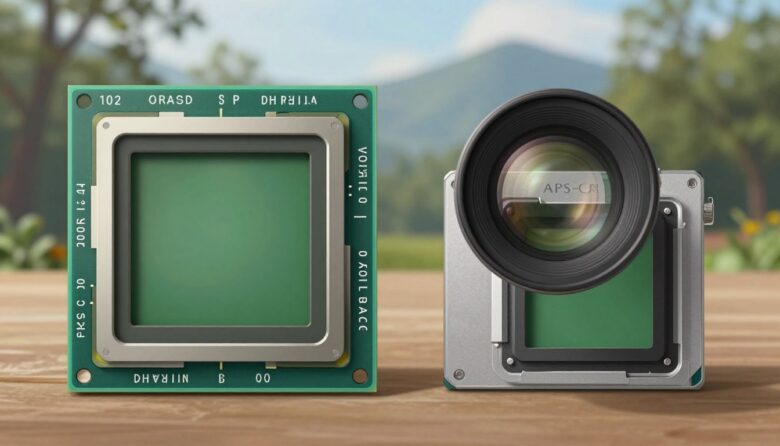
Full Frame vs. APS-C Sensors: Understanding the Crop Factor Explained

full frame vs APS-C

I spent five months moving from an APS-C system to a full frame setup to see if the hype matches reality. I tested weight, cost, low-light performance, and the real-world impact of the crop factor on composition and reach.

In this piece I break down how sensor size changes depth of field, dynamic range, and image quality. I also compare lenses, focal length behavior, and how subject-to-background separation shifts between cameras.

What really changed after I tested APS-C and full frame side by side

When I decided to compare APS-C and full frame in my own workflow, I expected a dramatic difference in every situation. But after months of shooting, what stood out most was how subtle those differences could be in everyday use. In good lighting, I often couldn’t tell which system I had used unless I zoomed in or pushed the files in editing. That experience helped me understand that real-world results don’t always match the expectations created by specs and discussions online

From my experience, the biggest changes showed up in specific conditions, like low light or when I wanted stronger background separation. Outside of that, factors like lens choice, composition, and timing had a much greater impact on my images. I stopped thinking in terms of “better system” and started focusing on which setup made it easier for me to shoot consistently and comfortably.

If I could give one practical tip, it would be to evaluate your most common shooting conditions before upgrading systems. If you rarely shoot in low light or don’t need extreme background blur, a smaller sensor setup may already meet your needs. Testing both formats in real situations will give you a clearer answer than relying only on comparisons or expectations.

In my case, the real difference wasn’t just image quality, but how each system fit into my daily shooting routine.

My goal is practical: help photographers and enthusiasts choose a system that fits their style. I share hands-on results and the main advantages and trade-offs I found, including why one option may suit a given shooting area or reason better.

Key Takeaways

  • Sensor size affects depth of field and low-light performance.
  • The crop factor changes effective focal length and framing choices.
  • Weight and cost are real trade-offs when moving systems.
  • Lens selection influences image quality more than people expect.
  • Test gear in your typical shooting conditions before switching.

Defining the Sensor Format Debate

The sensor format debate often boils down to practical gains versus prestige among photographers.

I see two main camps: those who treat larger sensors as essential for the best image quality, and those who call sensor size irrelevant compared to technique and lens choice.

The term aps-c sensors comes from the Advanced Photo System type-C film format. That film era shaped how we think about modern sensor types and scale.

Understanding these options helps you weigh whether investing in a full-frame cameras system is necessary for your projects or if smaller, lighter gear meets your needs.

  • Practical benefits: low-light, dynamic range, depth control.
  • Trade-offs: cost, weight, lens availability.
  • Historical context: 35mm film set a baseline for many cameras.
Sensor TypeTypical BenefitCommon Trade-offWho It Helps
aps-c formatReach and compact kitsLess shallow depth at same focalTravel and hobby photographers
35mm-derived sensorsBetter dynamic rangeHigher cost and sizeCommercial and studio shooters
Smaller mirrorless sensorsLightweight systemsLower high-ISO headroomStreet and casual photographers
High-resolution sensorsFine detail and large printsFile size and processing needsLandscape and commercial work

Understanding the Full Frame vs APS-C Distinction

Sensor size drives more than marketing — it changes how you compose, what lenses you buy, and how images render.

Physical Dimensions

A standard full-frame sensor measures 36mm by 24mm, matching 35mm film. In contrast, an aps-c sensor runs about 25.1mm by 16.7mm. That makes the smaller sensor roughly 1.5 times smaller in area.

Because of that size gap, the smaller sensor crops the view from any given lens. Mount a full-frame lens on an aps-c camera and the scene looks tighter. The change affects framing, effective focal length, and how much of the scene the image sensor records.

Historical Context

The word full-frame emerged to separate these larger sensors from the digital-era aps-c sensors that followed film. Early digital cameras adopted the smaller types to save cost and size.

Today the choice is practical: aps-c cameras give reach and compact kits, while full-frame sensors offer wider field and different depth behavior. I weighed both in real shoots to see which fit my work.

My Personal Journey Switching Systems

To answer a nagging question about usability, I moved from my Fuji mirrorless bodies to Sony and documented the shift.

Five months ago I changed my main kit from a Fuji X-H2 and X-T5 to a Sony A7R V and A7C II. I had relied on an aps-c camera for years because it made travel and street work lighter.

The tests focused on real assignments. I compared handling, autofocus, and how each sensor affected depth and dynamic range. I shot landscapes, portraits, and low-light scenes to see where the change mattered.

What I learned: the decision wasn’t only about the full-frame sensor. It was about how a camera system fits my workflow, which lenses I needed, and how often I wanted to carry gear. As a photographer, I weighed portability against subtle image gains from larger sensors and different models of full-frame cameras.

Comparing Gear Weight and Portability

I learned quickly that what I carry changes how often I shoot and what I shoot. Portability shapes my days in the field as much as any spec on a sheet.

Weight Trade-offs

My Fuji kit weighed 4.87kg, while my Sony full frame kit came in at 3.9kg. That lower weight came because I chose slower, lighter lenses on the Sony.

If I had used equivalent f/1.4 glass on the Sony, the weight gap would have flipped. Fast lenses add significant bulk and can erase any gains from a lighter body.

The Sony A7R V is slightly heavier than the Fuji X-H2, yet the A7C II is smaller and lighter than the X-T5. These differences matter when I hike or shoot all day.

  • Pack weight affects how long I stay out shooting.
  • Lighter cameras and lenses increase mobility and spur more creative shots.
  • Better image quality and sensor advantages must be balanced against carrying burden.
KitTotal WeightNotes
Fuji travel kit4.87kgCompact lenses but heavier combo overall
Sony mixed kit3.9kgSmaller bodies with slower lenses
Sony with f/1.4 glass+ heavierSignificant weight increase

Choosing gear is about trade-offs. For me, carrying less often led to more productive photography. I weighed size, depth control, and the practical advantages before deciding what to pack.

Analyzing the Cost of Professional Kits

When I compared costs, the sticker shock was the clearest surprise.

I found that my Fuji kit totaled £9,692, while my Sony kit reached £11,049. That gap matters when you budget for a camera system and the lenses you trust.

Building a like-for-like, premium setup pushed the bill even higher. My estimate for a top-tier, full frame kit hit £16,312. For most of us, that is a significant investment in photography.

Pricing varies by region and by retailer. I checked WEX to ground these numbers in real UK listings. Sales and promotions can narrow the gap, but the raw difference is hard to ignore.

  • Consider third-party glass or brands like Panasonic to reduce cost.
  • Prioritize a few quality lenses over many cheap ones to protect image results.
KitApprox. CostNotes
Fuji travel kit£9,692Compact, cost-effective
Sony mixed kit£11,049Higher body and lens prices
Like-for-like premium£16,312Top glass and pro bodies

Ecosystems and Lens Compatibility

When I mapped my kit, the ecosystem mattered more than any single sensor spec.

I looked at how lens choices, service, and accessories affect long-term use. The right ecosystem makes upgrading painless. It also shapes what images you can make.

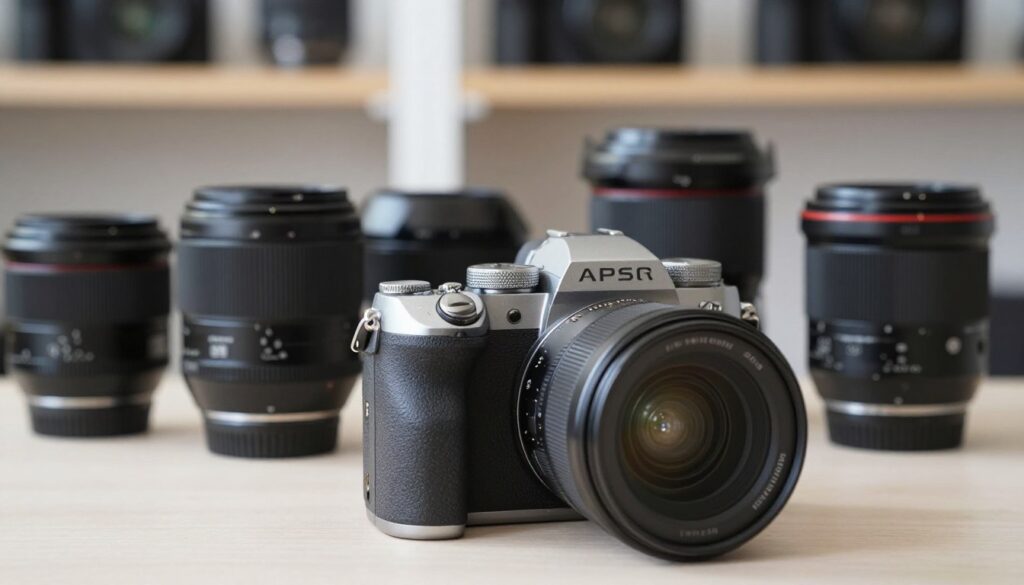
Close-up of a high-quality APS-C camera with a versatile lens, positioned prominently in the foreground on a clean, minimalistic surface. The camera is detailed, showcasing its sleek design, buttons, and textured grips, with light reflecting off the metallic components. In the middle ground, a variety of lenses compatible with APS-C sensors are artistically arranged, emphasizing their differences in size and construction, with a focus on their mount compatibility. The background features soft, blurred photography gear shelves, creating a sense of depth and context without distraction. The lighting is bright and even, casting gentle shadows to enhance the camera’s features, conveying a professional and focused atmosphere. The overall mood is informative and sophisticated, perfect for understanding the ecosystems surrounding APS-C cameras.

Brand Ecosystems

Sony offers a huge range of cameras and lenses. That shared mount lets me move from an aps-c camera to a full-frame camera without relearning mounts.

Fujifilm has a growing lineup and great glass, but it feels more niche. For many photographers, ecosystem depth can outweigh sensor gains when choosing gear.

Lens Mount Flexibility

Mount flexibility matters if you want to reuse lenses across bodies. Adapters widen your range and keep costs down.

  • Interchangeable mounts ease upgrades.
  • Third-party lenses expand focal length options.
  • Consider future support when you pick a brand.
BrandMount OptionsLens RangeWho Benefits
SonyNative E-mount, adaptersExtensive (wide to tele)Those who upgrade between sensors
FujifilmX-mountStrong prime selectionPortrait and street photographers
Third-partyVarious mounts, adaptersCost-effective rangeBudget-conscious pros

Performance Metrics Beyond Sensor Size

Speed and reliability shape how often I hit the shutter. Performance traits like autofocus, battery life, and startup time matter in day-to-day work.

I found these metrics depend more on brand and model than on sensor size. My Sony bodies beat my Fujifilm kit in autofocus tracking, burst speed, and battery endurance.

That doesn’t mean one sensor type is inherently faster. A well‑tuned aps-c cameras model can outpace an older full frame camera in raw responsiveness.

For wildlife photography, the camera’s tracking and frame rate often beat theoretical image gains from a larger image sensor.

When choosing gear, measure real metrics: start-up time, continuous shooting range, and how long the battery lasts on a long day.

  • Test autofocus on moving subjects.
  • Check burst depth and buffer clearing time.
  • Confirm battery life under your shooting style.

Understanding these figures helps you pick a camera and lenses that match your photography needs, not just a spec sheet promise.

Image Quality in Ideal Daylight Conditions

I find that on bright days the differences between sensors shrink. When light is even and strong, my camera choices make less visible difference in regular use.

In good light, images from modern sensors look clean and detailed. A 60MP sensor can show finer detail in crops, but a 24MP aps-c sensors sensor often looks identical when scaled for web or social sharing.

See also  The Best Low-Light Camera Bodies for Night Photography and Events

If you prefer a softer, filmic look, post-processing can erase many technical gaps. Editing style, color grading, and noise reduction often matter more than raw sensor size.

Lens choice and exposure technique play the largest role in final image quality. Use sharp lenses, nail focus, and expose well, and you’ll get photos that stand up in print and online regardless of which cameras you own.

  • Modern sensors deliver excellent daylight performance.
  • Pixel-peeping and extreme crops reveal the real differences.
  • For most photography shared online, the gap is minimal.

Low Light Performance and Noise Control

Low-light shoots taught me more about sensor limits than any spec sheet. Night work highlights differences in how sensors collect light and how that shows up as noise in the final image.

I learned that a larger sensor gathers more light, which is the main advantage of many full-frame cameras in dim scenes. That extra light lets me use lower ISO settings and keep noise under control.

Lower ISO means cleaner files and more headroom when editing. It also allows faster shutter speeds, so I capture sharper photos when subjects move or when I shoot handheld.

ISO and Shutter Speed Benefits

With more light per pixel, I can stop down the aperture to avoid an overly shallow depth field while still maintaining a usable shutter speed.

When I compared images from both sensor sizes in the same conditions, the larger sensor consistently produced cleaner results with less noise. For photographers who shoot in challenging light often, those gains justify the investment.

FactorWhat I SawPractical Tip
Light gatheringLarger sensors collected more photonsUse lower ISO for cleaner edits
Shutter speedFaster settings possible with same exposureIncrease shutter to reduce motion blur
Aperture controlCan stop down without losing exposureStop down to improve depth and sharpness
NoiseSmaller sensors showed more grain at high ISOShoot RAW and apply noise reduction carefully

The Reality of the Crop Factor

One simple math trick helps you predict how a lens will behave on a smaller sensor.

The common 1.5x crop factor means a 50mm lens on an aps-c camera gives roughly the same field of view as a 75mm lens on a full frame setup. This magnification is a direct result of the smaller aps-c sensor size compared to the traditional 35mm film format.

Understanding the crop factor is essential when you switch systems. It lets you calculate effective focal length and plan composition before you shoot.

The crop effect changes the effective area of the image captured. That affects framing, subject placement, and how much background you include. I had to recompose scenes often when I moved between cameras because the view tightened.

While many call the crop factor a drawback, it can be an advantage. Wildlife and sports shooters gain extra reach from their lenses without buying longer glass. Still, you must account for the crop when choosing lenses and setting focal length for a given shot.

Practical tip: when you think about a focal length on an aps-c format body, multiply by 1.5 to get the equivalent field of view on a 35mm-derived sensor. That simple step keeps compositions predictable and helps you pick the right lens for the job.

Depth of Field and Subject Separation

Nailing subject separation often comes down to knowing how aperture and sensor size interact.

A 35mm f/2 lens will yield a shallower depth field on a full frame camera than it does on an aps-c camera. That extra blur makes the subject pop from the background more easily.

The crop factor also changes how the background renders. On a smaller sensor you get a tighter view, which can compress background detail and help reach for wildlife or distant subjects.

That said, both systems can match in light gathering and perceived depth when you choose lenses and step back or forward. You can mimic shallower depth by using a longer focal length or wider aperture.

“Master the link between focal length, aperture, and sensor size to shape your image.”

  • Use longer lenses to boost subject separation without changing aperture.
  • Shoot at wider apertures when you want smooth backgrounds.
  • Adjust subject-to-background distance to control blur.

Practical tip: learn how your camera and lenses interact. That knowledge is the secret to getting the look you want every time.

Professional Considerations for Working Photographers
Client demands and workflow needs often decide my camera choices more than specs.

A detailed view of an APS-C camera on a professional photography setup. In the foreground, the camera is positioned sharply, showcasing its sleek design and textured grip, resting on a sturdy tripod. The middle ground highlights a high-quality lens attached to the camera, emphasizing elements like the aperture rings and focus mechanism. The background features a softly blurred photography studio environment with softboxes casting diffused lighting, creating a warm and inviting atmosphere. The image should convey a sense of professionalism and creativity, showcasing the precision of the camera. Include subtle hints of photographic gear, like light meters and reflectors, to enhance the context. The overall mood should be inspiring, aimed at serious photographers evaluating their equipment choices.

I watch industry trends closely because many commercial niches lean on mature ecosystems like Sony and Canon. Those systems give fast service, robust lenses, and broad accessory support. Choosing a niche brand can mean trade-offs in parts and local support.

Dynamic range and high-resolution sensors matter when I need room to crop or print large images. For wedding and landscape work I value sensor latitude. For sports and wildlife, system speed and reliability are just as vital as the sensor itself.

Ultimately, the best camera is one that fits your workflow and keeps clients happy. I match lens choice and focal length needs to assignments, and I prioritize bodies that integrate with my team and post process.

RolePriorityWhy it mattersPractical tip
Commercial photographerDynamic rangeEditing latitude for retouchingChoose higher-resolution sensors
Wedding photographerReliabilityMinimal downtime on shootsStick with proven systems and lenses
Wildlife photographerSpeed & reachTracking and effective focal lengthPrioritize fast lenses and AF performance
Studio photographerLens selectionOptical quality for large printsInvest in a few top primes and zooms

When to Stick with Your Current Setup

Before swapping systems, ask whether new gear will fix a real problem or just promise one. If your aps-c camera already delivers the images you need, keeping it is often the best reason to save money and shoot more.

I found that most gains came from better technique, not gear. Improving composition, mastering exposure, and picking the right lens made the biggest difference in my work.

If you’re happy with your lenses and the camera’s performance, there’s little need to change. For wildlife shooters, the crop factor can even be an advantage by extending effective focal length without extra weight.

When to consider an upgrade: you need maximum dynamic range, or your job demands the highest resolution from a full-frame camera. Otherwise, invest in learning, a new lens, or support gear first.

SituationStick with kitUpgrade is sensible
Client workYes, if output is acceptedNo, unless specs require higher resolution
Low-light needsImprove technique and lens choiceConsider a full-frame camera for extreme low light
Reach for wildlifeYes, crop helps extend focal lengthUpgrade if you need better AF or print size

Conclusion

Putting cameras into real assignments clarified which gains matter and which are marginal. In practice, a camera’s ergonomics, menus, and the lenses you own often shape results more than sensor headlines.

strong, While a full frame sensor gives advantages in low light and shallower depth, those benefits feel minor for everyday photography and social or client work. For many shooters the crop advantage and lighter kits make the aps-c format sensible.

My suggestion: weigh image quality needs against cost and weight. Choose the system that keeps you shooting and lets your creative choices matter more than gear.

FAQ

What is the main difference between full-frame and APS-C sensors?

The key difference is sensor size. Larger sensors capture more light and usually offer better dynamic range and cleaner high-ISO images. Smaller sensors crop the scene, which effectively narrows the field of view for any given lens and changes depth-of-field behavior.

How does crop factor affect my focal length and field of view?

Crop factor multiplies a lens’s focal length to give an equivalent field of view on a smaller sensor. For example, a 50mm lens on a cropped sensor often looks like roughly 75–80mm on a larger sensor system, so you get a tighter view without changing lenses.

Will an APS-C sensor give me worse image quality than a larger sensor?

Not necessarily. In good light, many APS-C bodies deliver excellent detail and color. The differences become more apparent in extreme situations like very low light or when seeking the absolute best dynamic range, where larger sensors tend to excel.

How does sensor size influence depth of field and subject separation?

Smaller sensors generally yield deeper depth of field at the same aperture and framing, making background blur harder to achieve. To isolate subjects similarly, you might need faster lenses or longer focal lengths on a cropped sensor body.

Does switching systems mean changing my entire lens collection?

Sometimes. If you change brands or mount types, many lenses may not fit without adapters. Some brand ecosystems offer cross-compatibility or adapters that maintain autofocus, but you should expect trade-offs in size, weight, or functionality.

Are APS-C systems lighter and more portable than larger-sensor kits?

Yes, APS-C camera bodies and lenses are often smaller and lighter, which helps for travel, street, and wildlife setups where mobility matters. However, professional telephoto glass can still be heavy regardless of sensor format.

How do costs compare between the two formats for building a professional kit?

Building a pro kit on larger sensors usually costs more because bodies and full-size lenses are pricier. Cropped-sensor systems can be more budget-friendly while still delivering high-quality results for many commercial and editorial jobs.

Can I use lenses designed for a larger sensor on a cropped body?

Yes, you can mount lenses made for bigger sensors onto smaller bodies in the same mount family. You’ll get a cropped field of view and sometimes better corner performance, but the setup might be heavier and more expensive than native cropped-lens options.

What should I consider about brand ecosystems and lens availability?

Look at native lens lists, third-party support from Sigma or Tamron, and whether the manufacturer offers the focal lengths you need. Mirrorless ecosystems from Sony, Canon, Nikon, and Fujifilm differ in lens depth, adapters, and service support.

How does sensor size affect low-light performance and noise control?

Larger sensors capture more photons per pixel at similar resolutions, which typically yields cleaner high-ISO files and better shadow recovery. That said, recent smaller sensors with modern processing can be surprisingly capable in low light.

Does crop factor help reach for wildlife and sports photography?

Yes. The effective telephoto reach from a cropped sensor can be an advantage for distant subjects, letting you frame tighter without adding weight or cost with longer glass.

Will I lose dynamic range switching to a smaller sensor?

You may see slightly reduced dynamic range, especially in highlights and deep shadows, but improvements in sensor tech and RAW workflows have narrowed the gap significantly for many shooters.

How do I decide which format fits my photography style?

Match the format to your priorities: choose portability and cost savings for travel or hobby work, or pick larger sensors if you need maximum low-light performance, shallow depth of field, and ultimate image quality for commercial assignments.

Are there creative limits when using a cropped sensor?

Not strict limits. Cropped sensors can challenge background blur and ultra-wide framing, but they excel in reach and compactness. Creative choices, lens selection, and technique often overcome format constraints.

If I plan to upgrade later, is it smart to start with a cropped body?

It can be. Starting on a cropped platform lets you learn lenses and composition affordably. If you anticipate moving to a larger sensor, prioritize investing in high-quality lenses that will remain useful on future bodies or choosing mounts with easy upgrades.

Leave a Reply

Your email address will not be published. Required fields are marked *