When is it Actually Time to Upgrade Your Camera Body?

when to upgrade camera

I often ask myself the same question: am I ready to swap starter gear for a pro-level body? My path began with a basic DSLR and a few cheap lenses. Selling photos and earning money changed how I saw my tools.

Modern entry-level mirrorless and DSLR options offer 20+ megapixels and strong control over shutter and ISO. That makes the choice complex. The industry draws clear lines between consumer bodies and professional rigs based on sensor size and build quality.

What made me rethink upgrading my camera gear

There was a point where I felt almost convinced that upgrading my camera body would instantly improve my results. I had been comparing my work to others and assumed my gear was the limiting factor. But after spending more time shooting with the same setup, I noticed that my best photos didn’t come from new equipment—they came from moments where I understood light, timing, and composition better. That shift made me realize that not every limitation is caused by gear, even when it feels that way at first

From my experience, upgrading only makes sense when there is a clear technical barrier, like consistent issues in low light or autofocus that can’t keep up with your work. Outside of that, I’ve seen more improvement by refining technique and learning how to use existing tools more effectively. It’s easy to get caught up in comparisons, but I try to focus on whether my current setup is actually preventing me from achieving the results I need.

If I could give one practical tip, it would be to test your current gear in a variety of real situations before deciding to upgrade. Try different lighting conditions, lenses, and manual settings to see where the true limitations are. This helps you make a more informed decision and avoid spending on changes that won’t significantly impact your work.

In my case, improving my skills first made any future upgrade feel like a real step forward, not just a temporary solution.

I remember learning about sensor care, lens handling, and framing before I could deliver consistent quality. Deciding on new gear should match your goals, budget, and the value your photos bring. This guide helps you weigh the real difference between keeping current gear and moving up.

Key Takeaways

  • Start with practice gear; pro bodies often come later in a career.
  • Many entry-level models now have 20+ megapixels and useful controls.
  • Sensor size and build set consumer and professional models apart.
  • Think about finances, goals, and how gear affects photo quality.
  • Learn lens care and sensor settings before investing in new gear.

Understanding the Urge to Upgrade

I often catch myself eyeing newer bodies after a long spell of uninspired shoots. A fresh model on display can feel like a fast track out of a creative rut.

That fictional chat between Ansel Adams and Ernest Hemingway keeps me honest: the photograph’s power rests in the maker, not the tool. I remind myself that skill and vision shape results far more than sensor specs.

Many photographers ask the same question: is buying a new camera the answer? It’s a natural impulse, especially when you start earning money and want gear that matches ambition.

Before spending, I list the real reasons I crave change. Is it a technical limit, a style shift, or simple envy? Pinning that down often shows a clearer way forward.

  • I treat upgrading camera gear as a deliberate choice, not a quick fix.
  • Sometimes better lenses, practice, or workflow changes beat a new camera.
  • Understanding your motive saves money and hones your craft.

When to Upgrade Camera: Identifying Technical Limitations

I noticed image noise rising and autofocus slipping during evening shoots, which set off alarm bells. That is often the clearest sign that my gear limits my vision. Small flaws show up first in low light and fast-moving frames.

Low-Light Performance

Full-frame sensors usually give a real advantage over crop models for cleaner high-ISO shots and faster shutter speeds. For example, a Nikon D610 handles noise and dynamic range far better than many older DSLRs.

If my shutter speed stalls in dim venues or my kit lens can’t open beyond f/2.8, photos suffer. Higher megapixels and better ISO range in modern mirrorless bodies can restore usable frames for prints and client work.

Backup Camera Requirements

For weddings and one-time events, dual-memory card slots and a solid backup are non-negotiable. I learned that reliability of the shutter and card redundancy matters more than a slight gain in specs.

  • I found that struggling in low light was a clear reason I needed new gear.
  • Photographers shooting weddings should always have a backup body ready.
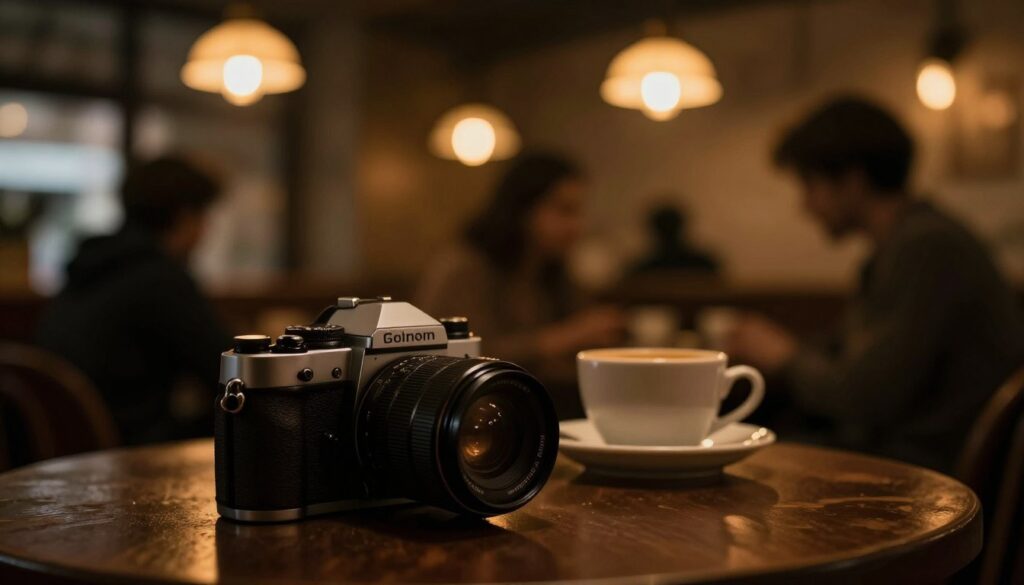
  • After five years, my old DSLR missed the speed and megapixels offered today.

“Never miss a frame because of a single point of failure.”

A mesmerizing low-light photography scene inside a dimly lit café, featuring a camera placed on a table with its lens aimed towards a softly illuminated coffee cup. In the foreground, details of the camera's buttons and textures are captured sharply, highlighting its advanced features. The blurred background reveals patrons engaged in conversation, with warm, golden ambient lighting emanating from vintage pendant lamps. The atmosphere is cozy and intimate, evoking a sense of nostalgia. Utilize a shallow depth of field to contrast the camera's fine details against the soft bokeh of the light sources, emphasizing its low-light performance capabilities. The angle should be slightly above eye-level, providing a captivating perspective of the scene.

The Impact of Sensor Size on Image Quality

Sensor size dictates much of what my photos can achieve in low light and large prints.

I found that full-frame sensors are roughly 2.5 times larger than crop sensors. That larger area gives more room for pixels and yields cleaner results in dim light.

Crop sensors (DX / APS-C) often serve hobbyists and entry-level users, while full-frame (FX) is the pro standard.

The real difference shows up when I print at sizes over 8×10. Full-frame files hold finer detail and a wider tonal range. This makes image quality much better for client work.

  • I learned that sensor size is the primary difference between consumer gear and professional bodies.
  • A larger sensor gives a wider range of light sensitivity and cleaner high-ISO files.
  • For large prints and commercial jobs, full-frame resolution often matters most.

“Understanding sensor size helped me judge if my current body was limiting my creative potential.”

Signs That You Should Keep Your Current Gear
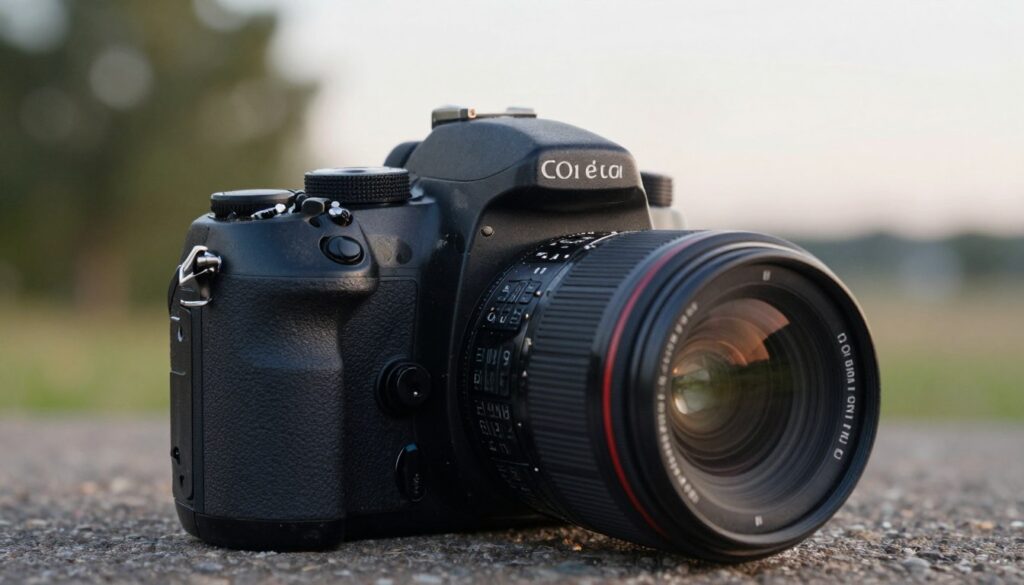
Sometimes the urge to buy new gear hides a lack of direction. I pause and map my goals before spending. A clear plan shows whether the problem is skill or kit.

A well-used DSLR camera sits prominently in the foreground, showcasing its weathered body and intricate details like dials and buttons, reflecting its reliability and character. Soft natural light highlights the textures, emphasizing flaws and wear that tell a story of countless captures, while a shallow depth of field softly blurs the background, which features scenic elements like trees and a soft horizon to suggest outdoor adventures. The mood is one of nostalgia and practicality, conveying a sense of contentment and loyalty to current gear. The camera is slightly angled to invite the viewer's gaze, with a gentle bokeh effect enhancing the focus on its features, inviting contemplation on the merits of holding onto familiar equipment.

Lack of Clear Direction

I advise students: define a style first. If you do not know your niche, keep using the current camera and lenses. Spend time shooting projects, not shopping lists.

Relying on Automatic Modes

Automatic settings mask the link between shutter, aperture, and ISO. Mastering manual controls fixes many issues that feel like hardware faults. Practice with an f/2.8 prime for a few months as an example.

Comparing Yourself to Others

Comparing photos is the number one reason photographers buy new camera gear unnecessarily. Your work improves faster when you learn lens handling and exposure. I learned that controlling shutter speed made more difference than chasing a new camera.

  • If you rely on auto, delay any upgrade camera purchase.
  • Basic kit lenses often suffice while you build skill.
  • Pick a small project and test performance before spending.

“Focus on craft first; gear follows purpose.”

Evaluating Your Lens Collection Before the Body

I always begin by checking my lenses before I consider a new body. A good lens shapes light, contrast, and sharpness in ways the sensor can only record.

See also  How to Fix Overheating Issues When Recording 4K Video on Mirrorless Cameras

The kit lens that came with my first dslr lasted years and taught me more than any spec sheet. Many kit lenses are underrated and will serve well while you learn craft and exposure.

Investing in a better camera lens often delivers the biggest leap in image quality for your money.

  • Test each lens on real shoots. A pro prime on an older body can outperform a cheap zoom on a newer model.
  • Avoid crop-only glass if full-frame is in your future. Nikon’s cheaper 35mm f/1.8 is a crop lens and will not serve on full-frame bodies.
  • Look for value: many f/2.8 primes today offer great optics for under $300 and boost low-light performance.
  • Remember that poor glass limits megapixels and detail, even with high-resolution sensors.

“A superior lens on an older body often beats an inferior lens on a newer one.”

Before spending money on a new body, inventory your gear and prioritize lenses that improve sharpness, bokeh, and consistency. That choice often ends up being the smartest investment.

The Role of Skill Over Equipment

I learned fast that mastering manual settings changed my images more than any spec upgrade.

Understanding how shutter speed, aperture, and ISO interact gives you real control over motion and depth of field. Once I set shutter speed for motion, I could freeze runners or blur water with intent. Changing aperture let me pick what stays sharp in the frame.

Mastering Manual Settings

I noticed that a Fuji XH2s and a much cheaper XT3 often produced results indistinguishable to most viewers. That proved a point: features matter less if you cannot use them well.

Many photographers buy new gear hoping for an advantage. I saw others miss the benefits because they never learned exposure fundamentals. Learning those basics gave me better photos with older bodies and lenses.

“A camera is a conduit for skill and emotion, not the source of the power.”

  • I believe learning manual settings is the fastest path to better photography.
  • Knowing shutter speed choices beats chasing the latest mirrorless body.
  • Focusing on composition and light improved my work more than new gear.
AreaSkill ImpactGear Impact
Motion controlHigh — learn shutter speed choicesMedium — faster bodies help, not required
Depth of fieldHigh — aperture use and placementLow — lens choice matters more than body
Low-light detailMedium — proper ISO and exposureHigh — modern sensors can help

Conclusion

A clear technical need, not envy, should prompt most gear purchases.

I believe deciding to upgrade camera gear is a personal journey driven by goals and real limits. If your work suffers from a specific fault, a new camera body may help. Use the phrase “upgrade camera” as a measured answer, not an impulse.

Skill in photography remains the biggest influence on image quality. Master your current tools, test lenses, and only buy a new camera when a specific technical constraint blocks your goals. In the end, this question ends with practice, planning, and purpose.

FAQ

How do I know if my body is holding me back?

I look for clear limits: noisy files at high ISO, slow burst rates during action, missing autofocus points in the frame, or a shutter that lags. If I repeatedly miss shots because the gear can’t keep up, it’s a sign my kit isn’t matching my goals.

Can better lenses improve images more than a new body?

Yes. Swapping a kit zoom for a fast prime or a pro-grade f/2.8 zoom often yields sharper photos, smoother bokeh, and better low-light performance. I’d invest in glass before a body when my lenses are the weakest link.

When should I consider a backup body?

I add a backup when I shoot critical jobs—weddings, commercial gigs, or long trips—where failure is costly. A second body with a similar mount or a basic DSLR or mirrorless works well and reduces stress during important shoots.

Is sensor size the main factor for image quality?

Sensor size matters, but it’s not everything. Larger sensors generally handle noise and dynamic range better, yet good technique, quality glass, and proper exposure often make a bigger visible difference in real-world photos.

My photos aren’t improving—should I buy new gear?

Not usually. If I’m unsure about composition, lighting, or exposure, gear won’t fix those gaps. I recommend practicing, studying light, and mastering manual settings before spending on new equipment.

How bad is relying on automatic modes?

Auto modes are useful, but they limit creative control. I switch to aperture or shutter priority to learn how depth of field and motion affect images. Mastering those gives me far more return than fresh hardware.

I compare my work to others—does that mean I need new equipment?

Comparison often misleads. I remind myself that editing, lighting, and post-production can create dramatic differences. If my technique and vision improve, better gear is a bonus, not a cure for comparison blues.

What technical limits should trigger a body change?

Persistent issues like unacceptable noise at needed ISOs, lack of AF performance in low light, or video specs you require (frame rates, codecs) are valid reasons. I weigh those against cost and lens compatibility first.

How do I prioritize lenses versus a new body?

I list what matters most for my photography—sharpness, aperture, focal lengths. If my current lenses don’t deliver, I upgrade glass. If lenses are solid but the sensor or AF is holding me back, I consider a new body next.

Will a newer model always give me noticeably better photos?

Not always. New models can add useful features—better AF, improved noise handling, higher frame rates—but the visible jump varies. I evaluate sample images, hands-on tests, and whether the new features solve real problems I face.

Should I pick mirrorless over DSLR now?

Mirrorless offers size, live view, and advanced AF advantages. I choose based on lens ecosystem, budget, and whether the specific mirrorless bodies address my needs. Many pros still use DSLRs effectively, so it’s about fit, not fashion.

How often do pros replace their bodies?

It varies. Some replace gear every few years for performance or new features; others keep proven bodies for a decade. I replace when the benefits outweigh the cost and match the demands of my work or creative goals.

Are megapixels the most important spec to watch?

No. High megapixels help cropping and large prints, but dynamic range, noise performance, and AF matter more for usable images. I focus on the specs that affect my shooting style rather than chasing pixel counts.

What role does shutter speed play in deciding on new gear?

If I need faster shutter sync for action or higher burst speeds to catch decisive moments, a new body with better shutter performance can matter. Otherwise, learning to anticipate and use proper technique often solves many motion issues.

How can I test a new body before buying?

I rent or borrow the model and shoot my usual subjects—portraits, low-light scenes, or sports. I compare files in my workflow, check AF in practical situations, and confirm lens compatibility to ensure the upgrade is worth it.

Leave a Reply

Your email address will not be published. Required fields are marked *