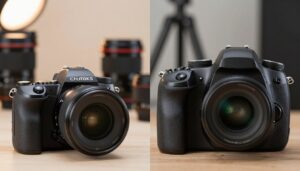
What Matters Most in a Hybrid Camera
Key Takeaways
- Look for 4K+ recording, solid autofocus, and in-body stabilization.
- Frame rates like 60fps enable smooth motion; 100fps+ supports slow motion.
- Fast cards and heat management are crucial for sustained recording.
- Choose a system with a good lens lineup to grow your kit.
- Balance sensor performance and value to match your shooting needs.
Understanding the Hybrid Camera Revolution
Professionals now juggle photography and video work on the same rig. A true hybrid camera must deliver strong autofocus, wide dynamic range, and reliable recording at high bitrates.
- Balanced stills and video performance
- High bitrates and versatile fps
- Strong autofocus and lens ecosystem
Defining the Best Hybrid Cameras for Modern Creators
Key Performance Indicators
Dynamic range matters for shadow and highlight detail in both portraits and log footage.
Autofocus speed and tracking keep fast action sharp across stills and motion.
Build quality and heat management determine how long the camera can record at high bitrates.
| Indicator | Why it matters | What to Evaluate |
|---|---|---|
| Dynamic range | Preserves detail in scenes | Raw exposures, log grading |
| Autofocus | Sharp stills and smooth tracking | Eye/face detect, moving subjects |
| Recording stability | Sustained 4K or higher output | Heat, card speed, battery |
The Shift from DSLRs
Mirrorless cameras brought faster readouts and modern video codecs to bodies designed for photography. That change gave me better frame rates, less rolling shutter, and more flexible lens options.
Fujifilm X-H2S for Professional Performance
The 26.1MP stacked APS-C sensor reads at about 1/180 of a second. That fast readout cuts rolling shutter and keeps action clean.
For stills, the X-H2S fires 40 uncompressed RAW frames per second with continuous autofocus. For motion, it can hit 240 fps in HD for smooth slow-motion clips.
- Dual card slots: CFexpress Type B plus UHS-II SD protects footage during long shoots.
- Cooling option: The Fujifilm FAN-001 helps extend recording time in pro environments.
Nikon Z8 as the Full Frame Powerhouse
Technical highlights: a 45.7MP BSI stacked sensor with a readout of 1/270th second powers stills and video alike.
Benefits of Stacked Sensors
A stacked sensor speeds readout and cuts rolling shutter. That can help photographers shoot fast action with cleaner frames and fewer artifacts.
The Z8 records 8K UHD at 30p and 4K UHD at 120 fps in 10-bit 4:2:0 H.265. It also supports internal ProRes RAW HQ and N-RAW for maximum latitude in post.
| Feature | Why it matters | Key Specification |
|---|---|---|
| Sensor | Resolution + speed | 45.7MP BSI stacked, 1/270s readout |
| Video | High-res and slow motion | 8K30p; 4K120 fps, 10-bit |
| Storage | Reliability for pro shoots | One CFexpress Type B + one UHS-II SD dual card slots |
Panasonic Lumix S5 II for Video-First Workflows
Key video strengths include 6K open gate recording for extra framing room and clean 4K 60fps for broadcast-ready clips. The S5 IIx option adds RAW output via HDMI and internal ProRes capture for tougher color workflows.
- Advanced tools: shutter angles, waveform, and vectorscope for precise exposure and color.
- Strong autofocus and steady performance during long takes.
- Good balance between stills and sustained recording for serious video work.
| Specification | Why it matters | Key Specification |
|---|---|---|
| Sensor | Full-frame detail and low-light performance | 24.2MP BSI full-frame |
| Recording modes | Flexible framing and high-res output | 6K open gate; 4K 60fps |
| Storage | Reliability for pro shoots | Dual UHS-II SD card slots |
| Workflow tools | Precision monitoring and color control | Waveform, vectorscope, shutter angle |
Fujifilm X-S20 for Content Creation Value
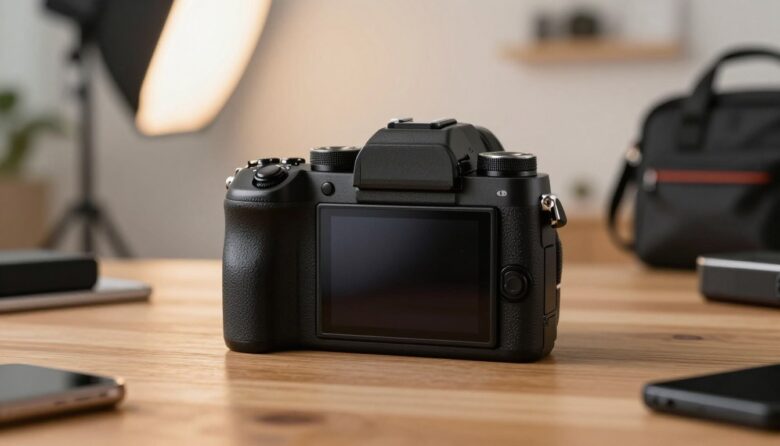
For creators who shoot run-and-gun and studio work, the Fujifilm X-S20 packs surprising pro features into a compact body.
The camera supports 6.2K open gate recording and 240 fps in Full HD for dramatic slow motion. Advanced autofocus algorithms from the X-H2S make subject tracking predictable during busy shoots.
What sells it to me is the balance of features and value. The X-S20 feels like a smart choice for content creators and those hunting a best budget option that still delivers pro-level recording.
- Compact APS-C camera body with strong stabilization.
- Robust video features and long battery life for extended shooting.
- Reliable autofocus and versatile lens support for travel and run-and-gun work.
Sony ZV-E10 II for Vlogging and Portability
For creators who move between vlogs, interviews, and travel clips, a lightweight tool can make daily work far easier.
The built-in 3-capsule directional microphone plus a dedicated windscreen gives clean on-board audio without a bulky rig.
Color tools like S-Cinetone and S-Log3 make grading easier and let me match footage to larger setups during editing.
- Compact, travel-friendly body and simple controls for quick setup.
- Solid autofocus and useful color profiles for pro-style grading.
- Good for creators who want strong video and usable stills from one small camera.
Sony Alpha 7S III for Low Light Mastery
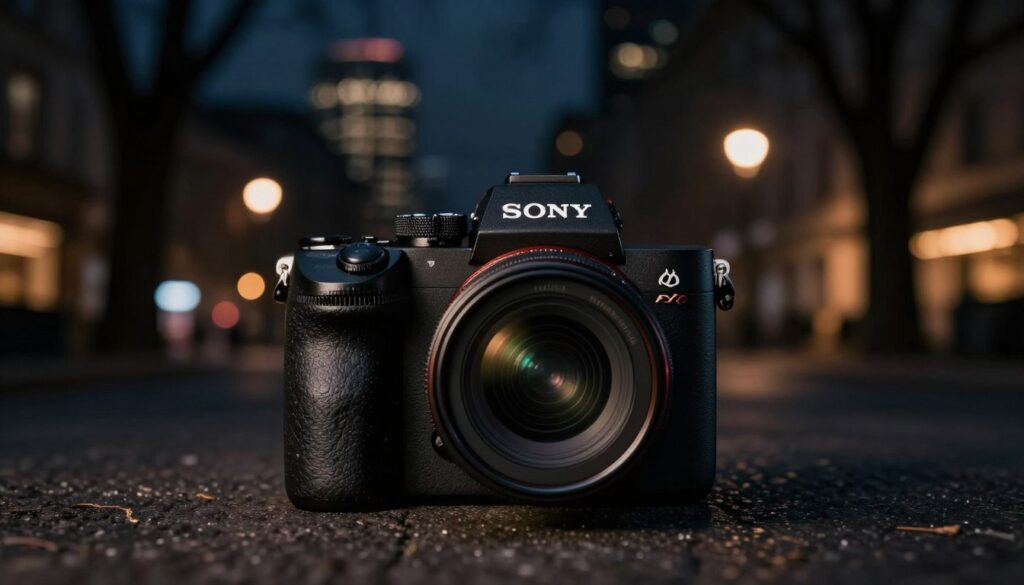
The 12MP full‑frame sensor uses a dual gain design to pull clean signal at high ISO. That design gives me wide dynamic range and low noise for both stills and long takes.
The body includes dual card slots that accept UHS‑II SD and CFexpress Type‑A cards. That setup protects media during long shoots and helps with sustained high‑bitrate recording.
- Exceptional low‑light sensor and dynamic range.
- 4K 120 fps without crop for high‑speed shooting.
- Dual card slots with CFexpress Type‑A support for reliable recording.
Evaluating Sensor Size and Image Quality
Sensor size and architecture directly affect image quality, rolling shutter, and the look of your footage.
Stacked sensor designs change the game for video. The Fujifilm X-H2S uses a stacked sensor to speed readout, cut rolling shutter, and allow higher fps without extra artifacts.
Why Autofocus Reliability Matters
Sharp, reliable focus is the single feature that saves a shoot when subjects move fast.
Modern hybrid camera systems improved focus with phase detection and smarter algorithms. The Panasonic Lumix S5 II shows how phase-detect points speed subject acquisition for sustained recording.
- Speed: Fast focus cuts missed moments when action is sudden.
- Consistency: Smooth tracking reduces hunting during long takes.
The Importance of Open Gate Recording
Only a few hybrid camera models support true open gate recording. The Fujifilm X-H2S and the Panasonic Lumix S5 II are notable examples that give me full-sensor capture for high-resolution output.
For serious video work, open gate is a must-have feature. It helps future-proof footage, lets me pull different frames for stills, and gives editors more room to recompose.
- Open gate improves overall workflow and final performance for multi-platform shooting.
Managing Storage with Dual Card Slots
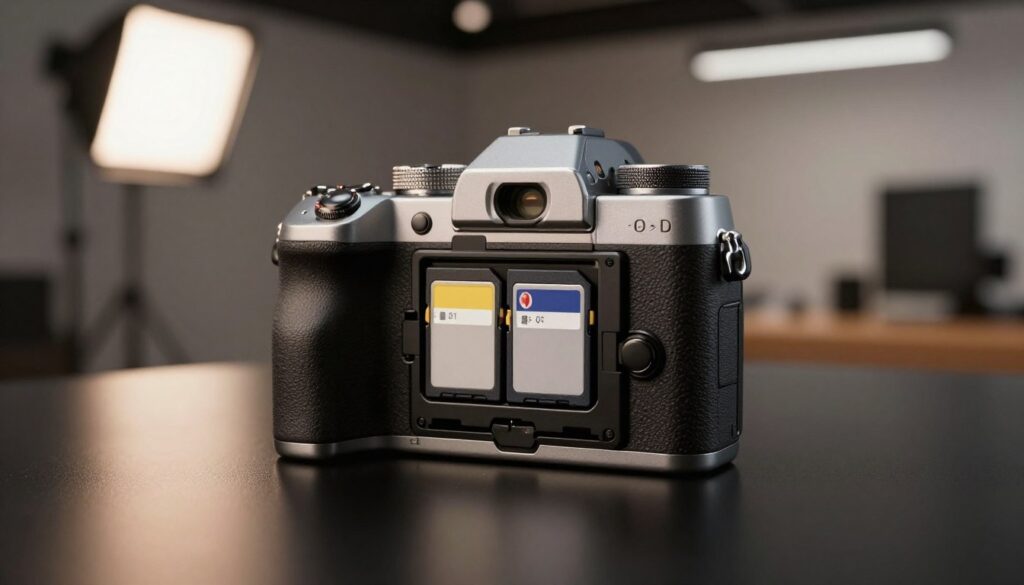
- Redundancy: protects stills and video from card failure.
- Flexibility: overflow or backup modes for long shoots.
| Use Case | Slot Setup | Benefit |
|---|---|---|
| Client event | Simultaneous write | Immediate backup, low risk |
| Long run-and-gun | Primary + overflow | Extended recording time |
| High-bitrate video | CFexpress + UHS-II SD | Speed and reliability for sustained recording |
Stabilisation Systems for Handheld Shooting
IBIS can help photographers shoot steady video and sharp stills at slower shutter speeds. That saves time on set and reduces the need for extra gear.
Advanced systems now compensate for rotation, pitch, and yaw. That means professional-looking handheld footage without a gimbal, even at higher frame rates.
- Test stabilisation in-camera with movement, panning, and slow-motion at higher fps.
- Pick a camera whose stabilisation matches your lens and shooting style for reliable results.
Choosing Between APS-C and Full Frame
APS-C sensor systems give me a compact, lightweight kit for travel and fast shooting. An APS-C camera like the Fujifilm X-S20 proves you can get excellent autofocus, steady recording, and strong fps without carrying extra weight.
- Full frame wins for low‑light and shallow DOF in professional photography.
- The best hybrid camera for you balances sensor size, performance, and portability.
Essential Accessories for Hybrid Shooters
External Microphones
Why it matters: clear dialogue and ambient capture save hours in post and lift the overall production.
Cooling Fans
Fans help protect sensor and processor performance during sustained 4K or high‑fps shoots.
High-Speed Memory Cards
Pick cards that match your camera’s card slots and backup strategy so you never stop shooting.
- The Fujifilm FAN-001 fan keeps the body cool for longer recording sessions.
Conclusion
Focus on how the camera feels, the lens support, and card workflow. Practical comfort and reliable performance matter more than raw resolution when you shoot all day.

The GBI LensLab Editorial Team publishes informational guides about cameras, lenses, image sensors, photography workflows, camera maintenance and digital imaging technology. Technical specifications are checked against manufacturer documentation and other appropriate primary sources when available.