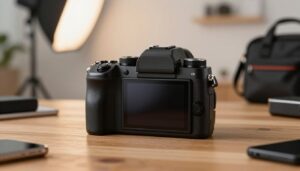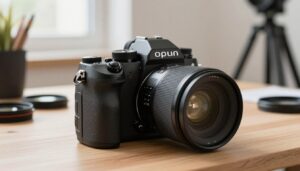
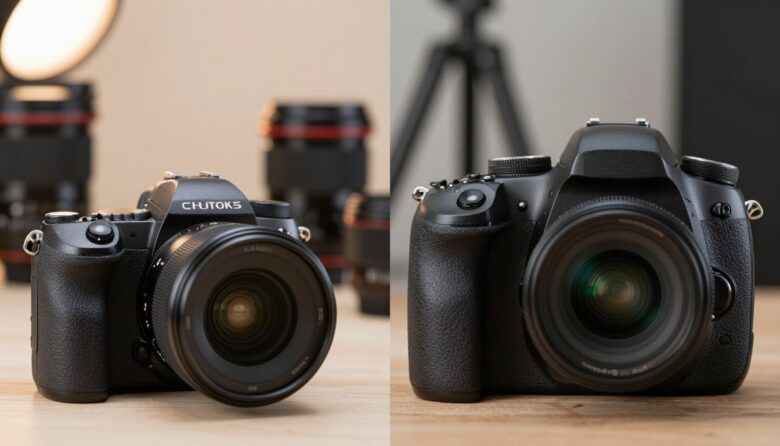
Choosing between systems comes down to how a mirror or sensor shapes size, speed, and the viewfinder experience. Modern mirrorless bodies offer real-time exposure previews and fast autofocus tracking that older DSLRs did not.
Practical Factors When Choosing Between DSLR and Mirrorless
Start by understanding how these tools work, and you’ll make better shots in any light.
Key Takeaways
- History matters: the Canon Digital Rebel helped launch many photographers in 2004.
- One system uses a mirror to feed an optical viewfinder; the other relies on the sensor and an EVF.
- Mirrorless often gives live exposure previews and strong autofocus tracking.
- DSLRs can still win on battery life and familiar handling for some people.
- Your subject, shooting speed, and lens needs determine the best system for you.
Understanding the Core Differences
The big mechanical change is simple: a mirrorless camera removes the mirror box found in Canon EOS DSLR models, while a dslr keeps mirrors to send light into an optical viewfinder.
This matters because a mirror uses prisms and mirrors to show an exact optical frame. That gives some shooters a direct view with no electronic lag.
By contrast, mirrorless cameras rely on the sensor to handle autofocus and exposure. That design lets manufacturers build smaller, lighter bodies that still deliver excellent image and video results.
Practical trade-offs:
- Weight and portability often favor mirrorless for travel and street photography.
- Lens ecosystems and budgets can make a dslr setup more affordable for some photographers.
- Both systems produce superb images; the choice comes down to handling, lenses, and how you work with light and frame a shot.
Mirrorless vs DSLR: How the Systems Function
Let me explain how these camera designs actually process light and produce the image you see.
Optical viewfinders
A traditional optical viewfinder uses a mirror to send light up into a prism and into your eye. In many dslrs that mirror flips with each exposure so a dedicated autofocus and metering sensor can read the scene.
This gives a true, lag-free optical frame that many photographers prefer for action and classic composition. It also means the camera relies on separate AF modules and phase-detection hardware to achieve fast focus.
Electronic viewfinders
Electronic viewfinders (EVF) show a live feed from the main sensor. When you look through an EVF you see a digital preview of exposure, color, and focus in real time.
That lets me adjust settings while composing, and it boosts autofocus and video features because the sensor handles metering and tracking directly. Using live view on a dslr can mimic this, but a dedicated EVF is generally faster and more efficient for that workflow.
| Feature | Optical Viewfinder | Electronic Viewfinder |
|---|---|---|
| Light path | Mirror to prism (optical) | Sensor to display (digital) |
| Autofocus handling | Dedicated AF sensors (phase detect) | Sensor-based AF and tracking |
| Real-time preview | No (until exposure) | Yes — exposure, color, and focus shown |
Choosing a dslr mirrorless way often comes down to whether you want that instant optical clarity or the digital convenience of an EVF. Both systems capture excellent images; they just route light and focus in different ways.
The Evolution of Camera Viewfinders
The way we see a scene through a camera has been reshaped by digital displays and faster sensors.
Over time the industry moved from mechanical mirror systems to high-resolution electronic displays. Early mirrorless cameras struggled to match optical clarity. Today, EVFs in modern cameras often beat those old viewfinders in low light and preview accuracy.
- Speed and accuracy improved with sensor-based tracking.
- Many D750 users felt the EVF transformed their shooting experience.
- The trend favors digital integration, benefiting modern photography overall.
| Era | Typical Viewfinder | Key Benefit |
|---|---|---|
| Pre-2015 | Optical mirror + prism | Instant, natural view |
| Early mirrorless | Low-res EVF | Preview features, lower clarity |
| Modern | High-res EVF with sensor feed | Accurate exposure and true-to-shot image |
Comparing Autofocus Capabilities
Phase Detection
Phase detection has long been the staple in many dslr bodies like the Nikon D750. It is fast and reliable for static subjects.
One drawback: the D750’s AF module covers roughly 15% of the frame area. That means focus points are clustered near the center.
Subject Tracking
Modern mirrorless cameras use sensor-driven AF tech such as Dual Pixel-style systems. That lets nearly every pixel act as a focus point.
Focus Precision
While a dslr still shines with static work and certain lenses, the flexibility of live view focusing makes wider use of AF points possible.
| Aspect | Phase Detection (DSLR) | Sensor AF (Mirrorless) |
|---|---|---|
| Frame coverage | Centered, ~15% (Nikon D750) | Near full-frame coverage |
| Tracking | Good, limited to AF area | Excellent, wide-area subject tracking |
| Precision at high fps | Solid | Superior for eye and animal detection |
Size and Portability Considerations
Removing the mirror assembly lets mirrorless cameras be slimmer and easier to pack. That smaller footprint makes long walks and travel shoots far less tiring.
That said, many dslrs still offer a larger grip and a sense of stability when using heavy lenses. If you favor big glass for wildlife or sports, a heftier body can help steady the frame.
Modern small cameras do not skimp on battery life or image quality. Today’s sensors and autofocus systems deliver results similar to larger setups, even for video work.
| Factor | Smaller Body | Larger Body |
|---|---|---|
| Portability | High — easy to carry all day | Lower — heavier for long shoots |
| Grip & Stability | Improved ergonomics, lighter feel | Better balance with heavy lenses |
| Battery Life | Comparable on modern models | Often longer per charge |
| Image & Video | High quality, sensor-driven | High quality, traditional handling |
Lens Compatibility and Ecosystems
Adapting Older Glass
The Nikon F mount is legendary for compatibility. It lets users fit lenses made as far back as the late 1970s on modern dslr bodies.
Canon made it easy to bring EF and EF-S lenses to newer bodies with the EF‑EOS R adapter. That preserved many photographers’ investment in older glass.
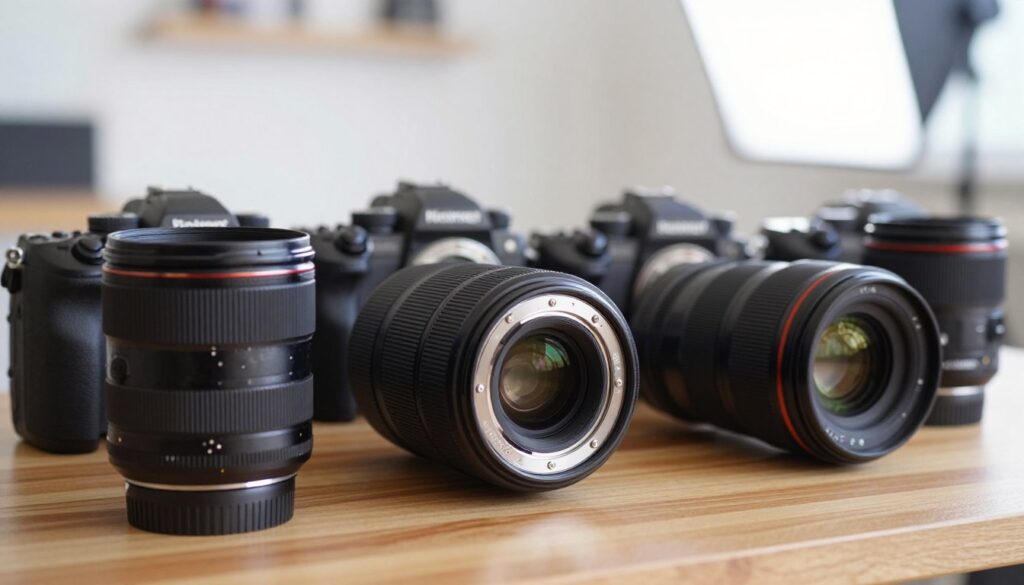
- New mounts on modern mirrorless cameras enable faster lens communication and improved autofocus.
- Legacy lenses often work well on a dslr with no adapter at all.
- Adapting glass can provide better focus confirmation on sensor-based bodies.
| Topic | Legacy Lenses | New Native Lenses |
|---|---|---|
| Compatibility | Often compatible with adapters or directly on dslr | Native mount — full feature support |
| Autofocus & Communication | May be slower or manual; adapter-dependent | Faster communication, optimized for sensor |
| Cost | Used market can be budget-friendly | Higher upfront, but tailored performance |
| Creative options | Unique character, vintage rendering | Consistent sharpness and focusing features |
Bottom line: Whether you favor a dslr or a modern camera system, lens availability and adaptability determine flexibility and long-term value in your photography gear.
Battery Life and Power Management
Power management is the unsung hero of a long shooting day for any photographer.
A DSLR typically lasts longer on a single charge because it doesn’t need to run an electronic viewfinder or constant sensor feed. That efficiency matters on long assignments or when you can’t recharge.
- Bring at least one spare battery for mirrorless bodies and two for heavy video days.
- Turn off Wi-Fi and image review when you don’t need them.
- Use airplane mode or power-saving display settings to stretch a charge.
| Factor | dslr | mirrorless |
|---|---|---|
| Typical per-charge shots | High | Lower, improving |
| Impact from stabilized lenses | Moderate | Higher — more drain |
| Best practice | One spare | One or two spares |
Video Performance for Modern Creators
Mirrorless cameras have become the go-to choice for creators because they pack advanced video tools in compact bodies.
The Canon EOS R6 Mark III stands out with 7K Open Gate recording. That gives extra image area to crop different aspect ratios without losing quality.
The electronic viewfinder and rear screen show exposure, color, and focus as you record. That live view confidence speeds setup and reduces reshoots.
Sensor-driven autofocus, especially Dual Pixel CMOS AF II, keeps subjects sharp at high frames per second. It helps when you’re on a gimbal or chasing moving people.
A dslr can still record beautiful video, but it usually lags in subject tracking and autofocus speed compared to newer sensor-based systems.
- Speed: fast autofocus and high-frame capture for action.
- Flexibility: 7K Open Gate lets you reframe for multiple deliverables.
- Portability: smaller size makes gimbal work easier for run-and-gun shoots.
| Feature | Sensor-based System | dslr |
|---|---|---|
| High-resolution recording | 7K Open Gate (Canon EOS R6 Mark III) | Often limited to 4K/Full HD |
| Autofocus during video | Dual Pixel CMOS AF II — continuous tracking | Good, but less fluid across the frame |
| Live preview | EVF and screen show final look | Live view available, but EVF preview absent |
| Handheld/gimbal use | Lightweight, balanced for gimbals | Heavier, sometimes harder to balance |
The Value of Used DSLR Gear
The upside is simple: many people are moving to mirrorless cameras and selling well-maintained bodies and glass. That creates a buyer’s market full of pro-quality options.
Buying used lets you practice autofocus, viewfinder framing, and exposure control on reliable hardware. You pay far less than new and still get beautiful images and video-ready bodies.
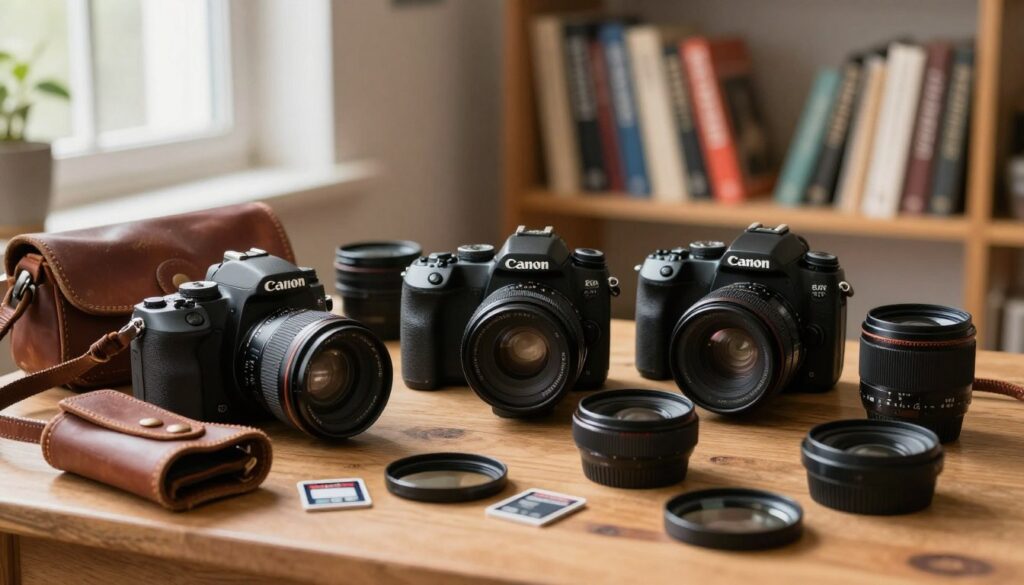
- You can find professional bodies and excellent lenses at a fraction of retail price.
- Used gear offers tactile controls that many photographers still prefer to the digital feel of newer bodies.
- For beginners, a used setup is a low-risk way to learn the fundamentals of exposure and focus.
| Item | Typical Used Price | Why It Matters |
|---|---|---|
| Full-frame dslr body (e.g., Nikon D750) | $400–$700 | High image quality, solid handling, long service life |
| Standard zoom lens (24-70mm) | $200–$400 | Versatile for portraits, street, and landscapes |
| Prime lens (50mm or 85mm) | $100–$250 | Sharp images, great for low-light and portraits |
| Telephoto or specialty lens | $150–$350 | Extends reach for wildlife and sports on a budget |
Real World Handling and Ergonomics
In low light the difference is obvious: the R5 electronic viewfinder can appear about seven stops brighter than a traditional optical viewfinder like the D750’s. That clarity can help focus and compose when shooting people or moving subjects.
Your choice should fit your workflow. If you want live view feedback and modern EVF benefits, choose a compact system that still handles like a pro. If you value long battery life and a classic optical viewfinder, a larger body may serve you best.
Choosing the Right System for Your Photography
Your shooting priorities — speed, lenses, or battery life — make the decision simple.
If you shoot fast action or wildlife, speed and autofocus matter most. For pros, the Canon EOS R1 delivers exceptional speed and precision autofocus with high frames per second capability.
Beginners often prefer the instant feedback of an electronic viewfinder and hands-on features that make learning easier. Many see a mirrorless camera as the faster route to modern video and live tracking.
Think about lenses and mount long-term. The choices you make now affect the glass you can use later and the system’s resale value.
- Professionals: prioritize speed, autofocus, and frames per second.
- Travel or street: favor compact bodies and lens choices.
- Long assignments: factor battery life and durable handling.
| Factor | Best For | Consideration |
|---|---|---|
| Speed & AF | Sports, wildlife | Canon EOS R1 — top-tier tracking |
| Lenses & Mount | Long-term kit building | Choose mount for lens availability |
| Battery Life | All-day shoots | Traditional bodies may last longer |
| Video & Viewfinder | Content creators | Live preview and modern features excel |
Conclusion
The right system is the one that makes you reach for the camera when a moment appears. What fits your hands, workflow, and subjects matters more than a spec list.
Both systems offer clear strengths: a DSLR can be rugged with long battery life and familiar handling, while a mirrorless body brings compact size and advanced autofocus that speed modern work. Canon’s ecosystem gives strong lens options and upgrade paths to support growth.
Try both before you buy. Pick the setup that feels natural, supports your creative vision, and helps you shoot more. That choice will serve your photography and video projects best.

The GBI LensLab Editorial Team publishes informational guides about cameras, lenses, image sensors, photography workflows, camera maintenance and digital imaging technology. Technical specifications are checked against manufacturer documentation and other appropriate primary sources when available.