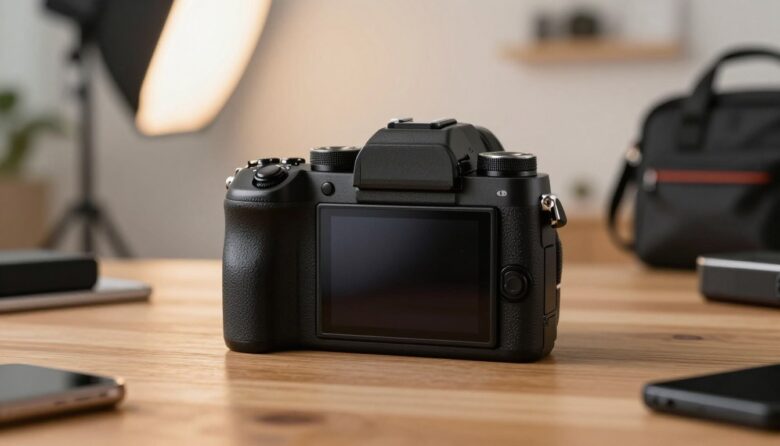
Top Hybrid Cameras for Shooters Who Do Both Photo and Video

best hybrid cameras

I write from experience: choosing the best hybrid camera is the single most important step for creators who juggle stills and serious video work. I want one tool that offers reliable autofocus, high resolution, and fast recording without forcing me to carry a suitcase of glass.

A true hybrid camera must handle heat, processing load, and fast cards while delivering usable frame rates for motion and smooth 4K or higher footage. I look for in-body stabilization, log recording, and a sensor that balances low-light speed with detail for photography.

What actually mattered to me after using hybrid cameras in real projects

After working with different hybrid cameras on real shoots, I realized that the spec sheet only tells part of the story. In one project, I chose a camera mainly for its high resolution and frame rates, but during longer recordings, I started dealing with heat warnings and workflow slowdowns. That experience made it clear that reliability during extended use is just as important as headline features, especially when you can’t afford interruptions.

From my experience, the best setup is the one that fits your routine, not the one with the most advanced specs. I’ve had better results with cameras that offer stable autofocus, manageable file sizes, and consistent performance over time. I don’t assume a higher price always means a better fit—what matters more is how well the camera handles your type of work, whether that’s short clips, long interviews, or mixed shooting days.

If I could give one practical tip, it would be to test your camera in conditions similar to your real projects before fully committing to it. Try recording for extended periods, check how files behave in your editing workflow, and see how the autofocus performs in your typical scenarios. These small tests reveal limitations early and help you make a more confident and realistic choice.

In my case, the cameras that worked best weren’t the ones with the most features, but the ones that stayed consistent when I needed them most.

In this guide I’ll share models that combine professional video features with excellent stills performance. Expect notes on fps options, lens ecosystems, battery life, and overall speed so you can pick one camera that suits your workflow.

Key Takeaways

  • Look for 4K+ recording, solid autofocus, and in-body stabilization.
  • Frame rates like 60fps enable smooth motion; 100fps+ supports slow motion.
  • Fast cards and heat management are crucial for sustained recording.
  • Choose a system with a good lens lineup to grow your kit.
  • Balance sensor performance and value to match your shooting needs.

Understanding the Hybrid Camera Revolution

I’ve watched mirrorless systems push video tools into bodies built for photography. That shift changed the cameras market and how I choose gear for both stills and motion.

Professionals now juggle photography and video work on the same rig. A true hybrid camera must deliver strong autofocus, wide dynamic range, and reliable recording at high bitrates.

Key technical needs include 10-bit color, flexible frame rates or fps options, and a sensor that balances low-light speed with resolution. I also look for filmmaking features like false color or adjustable shutter angle.

The native lens lineup matters almost as much as the body. A compact system with fast glass and good stabilization gives me the speed and performance I need for varied shooting.

“Mirrorless evolution has made pro-grade video tools accessible in photo-focused bodies.”

  • Balanced stills and video performance
  • High bitrates and versatile fps
  • Strong autofocus and lens ecosystem

Defining the Best Hybrid Cameras for Modern Creators

When I evaluate gear for mixed photo and film work, I start with measurable performance metrics. Modern content creators need a single tool that handles high‑resolution stills and long video recording without compromise.

Key Performance Indicators

Dynamic range matters for shadow and highlight detail in both portraits and log footage.

Autofocus speed and tracking keep fast action sharp across stills and motion.

Build quality and heat management determine how long the camera can record at high bitrates.

IndicatorWhy it mattersWhat I test
Dynamic rangePreserves detail in scenesRaw exposures, log grading
AutofocusSharp stills and smooth trackingEye/face detect, moving subjects
Recording stabilitySustained 4K or higher outputHeat, card speed, battery

The Shift from DSLRs

Mirrorless cameras brought faster readouts and modern video codecs to bodies designed for photography. That change gave me better frame rates, less rolling shutter, and more flexible lens options.

Fujifilm X-H2S for Professional Performance

The Fujifilm X-H2S is a compact workhorse I trust when speed and endurance matter.

The 26.1MP stacked APS-C sensor reads at about 1/180 of a second. That fast readout cuts rolling shutter and keeps action clean.

I use its 6.2K open gate recording at up to 30 fps for maximum framing flexibility. Internal ProRes 422 HQ gives me edit-ready files straight from the card.

For stills, the X-H2S fires 40 uncompressed RAW frames per second with continuous autofocus. For motion, it can hit 240 fps in HD for smooth slow-motion clips.

  • Dual card slots: CFexpress Type B plus UHS-II SD protects footage during long shoots.
  • Cooling option: The Fujifilm FAN-001 helps extend recording time in pro environments.

Overall, this APS-C camera balances speed, resolution, and robust recording features. It’s a top pick for my professional shooting where reliable performance and lens flexibility matter.

Nikon Z8 as the Full Frame Powerhouse

The Nikon Z8 brings flagship power into a slightly smaller, more nimble body. I value a tool that pairs high resolution with cinema-grade recording, and the Z8 does both.

Technical highlights: a 45.7MP BSI stacked sensor with a readout of 1/270th second powers stills and video alike.

Benefits of Stacked Sensors

A stacked sensor speeds readout and cuts rolling shutter. That lets me shoot fast action with cleaner frames and fewer artifacts.

The Z8 records 8K UHD at 30p and 4K UHD at 120 fps in 10-bit 4:2:0 H.265. It also supports internal ProRes RAW HQ and N-RAW for maximum latitude in post.

FeatureWhy it mattersWhat I get
SensorResolution + speed45.7MP BSI stacked, 1/270s readout
VideoHigh-res and slow motion8K30p; 4K120 fps, 10-bit
StorageReliability for pro shootsOne CFexpress Type B + one UHS-II SD dual card slots

In short, the Z8 is a compact full-frame option that brings flagship-level features without the bulk. Its speed, autofocus, and recording flexibility make it a top pick among the best hybrid cameras I recommend.

Panasonic Lumix S5 II for Video-First Workflows

For projects that lean toward motion, I reach for a tool that puts video features first without sacrificing stills. The Panasonic Lumix S5 II fits that role with a 24.2MP BSI full-frame sensor and 779 phase-detection autofocus points.

Key video strengths include 6K open gate recording for extra framing room and clean 4K 60fps for broadcast-ready clips. The S5 IIx option adds RAW output via HDMI and internal ProRes capture for tougher color workflows.

I value reliability on client shoots. The camera has dual UHS-II SD card slots for simultaneous backup and overflow. That dual card setup saves me from redoing takes when storage or integrity matters most.

  • Advanced tools: shutter angles, waveform, and vectorscope for precise exposure and color.
  • Strong autofocus and steady performance during long takes.
  • Good balance between stills and sustained recording for serious video work.
SpecificationWhy it mattersWhat I get
SensorFull-frame detail and low-light performance24.2MP BSI full-frame
Recording modesFlexible framing and high-res output6K open gate; 4K 60fps
StorageReliability for pro shootsDual UHS-II SD card slots
Workflow toolsPrecision monitoring and color controlWaveform, vectorscope, shutter angle

“The S5 II feels like a video-first camera that still lets me shoot confident stills when I need them.”

In short, the Panasonic Lumix S5 II is my go-to camera when serious video features and dependable recording matter most in a compact body.

Fujifilm X-S20 for Content Creation Value

For creators who shoot run-and-gun and studio work, the Fujifilm X-S20 packs surprising pro features into a compact body.

I rely on the X-S20 when I need strong video tools without a heavy kit. It uses a 26MP X-Trans BSI APS-C sensor and 5-axis IBIS rated up to 7 stops. That setup gives me stable handheld frames and crisp stills for quick edits.

The camera supports 6.2K open gate recording and 240 fps in Full HD for dramatic slow motion. Advanced autofocus algorithms from the X-H2S make subject tracking predictable during busy shoots.

What sells it to me is the balance of features and value. The X-S20 feels like a smart choice for content creators and those hunting a best budget option that still delivers pro-level recording.

  • Compact APS-C camera body with strong stabilization.
  • Robust video features and long battery life for extended shooting.
  • Reliable autofocus and versatile lens support for travel and run-and-gun work.

Sony ZV-E10 II for Vlogging and Portability

For creators who move between vlogs, interviews, and travel clips, a lightweight tool can make daily work far easier.

The Sony ZV-E10 II uses a 26MP APS-C sensor and a 759-point phase-detection autofocus system that keeps faces and subjects sharp when I’m moving.

I rely on its 4K 60fps recording for smooth footage and drop to 120 fps in Full HD when I want cinematic slow motion.

The built-in 3-capsule directional microphone plus a dedicated windscreen gives clean on-board audio without a bulky rig.

Color tools like S-Cinetone and S-Log3 make grading easier and let me match footage to larger setups during editing.

“The ZV-E10 II is a compact, ready-to-shoot option that keeps my workflow fast and reliable.”

  • Compact, travel-friendly body and simple controls for quick setup.
  • Solid autofocus and useful color profiles for pro-style grading.
  • Good for creators who want strong video and usable stills from one small camera.

Sony Alpha 7S III for Low Light Mastery
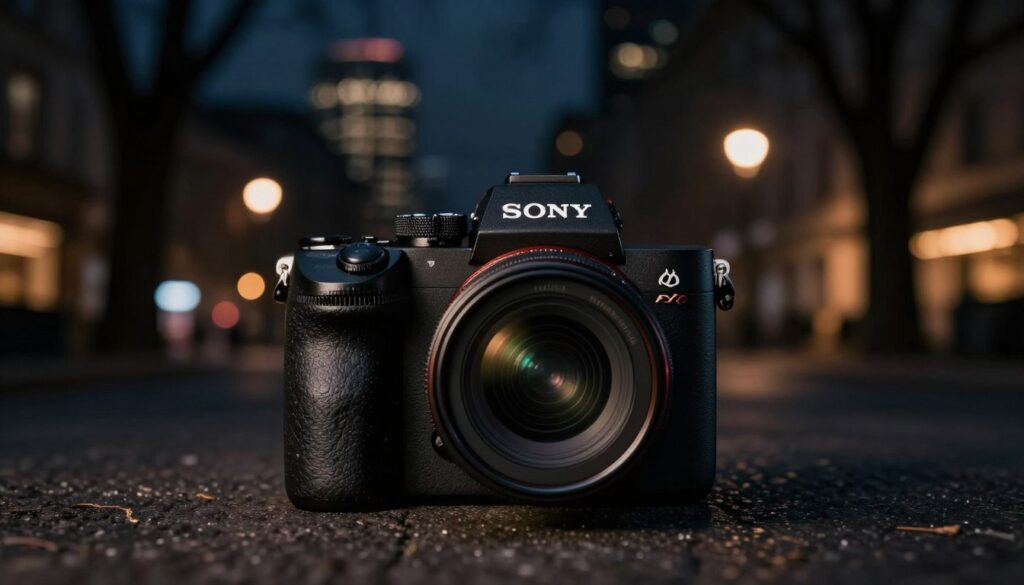
When night falls and light disappears, I reach for a tool that keeps detail where other bodies fail. The Sony Alpha 7S III is a compact workhorse that shines in tough lighting.

A Sony Alpha 7S III camera is positioned prominently in the foreground, showcasing its sleek design and high-end features, with the iconic logo clearly visible. The camera is equipped with a fast lens ideal for low-light photography, set against a dimly lit urban environment at night. In the middle ground, soft bokeh lights from distant city buildings glow warmly, creating an enchanting backdrop. Shadowy outlines of trees can be seen, adding depth and context. The atmosphere is mysterious and cinematic, reflecting the camera's low-light performance capabilities. The overall mood is one of creativity and inspiration, with a focus on the seamless blend of photography and videography in challenging lighting conditions.

The 12MP full‑frame sensor uses a dual gain design to pull clean signal at high ISO. That design gives me wide dynamic range and low noise for both stills and long takes.

I shoot 4K at 120 fps without a crop, so fast action stays wide and usable. The camera’s speed and rolling‑shutter control make high‑frame recording practical in low light.

The body includes dual card slots that accept UHS‑II SD and CFexpress Type‑A cards. That setup protects media during long shoots and helps with sustained high‑bitrate recording.

I rely on the 9.44m‑dot EVF for clean preview and framing when light is minimal. Combined with predictable autofocus and robust video features, the Alpha 7S III earns its reputation as one of the best hybrid camera options for filmmakers and photographers who shoot in the dark.

“For night work, the Alpha 7S III turns difficult lighting into usable footage.”

  • Exceptional low‑light sensor and dynamic range.
  • 4K 120 fps without crop for high‑speed shooting.
  • Dual card slots with CFexpress Type‑A support for reliable recording.

Evaluating Sensor Size and Image Quality

Sensor size and architecture directly affect image quality, rolling shutter, and the look of your footage.

A larger sensor usually gives cleaner low‑light performance and a shallower depth of field for portraits. That makes full‑frame bodies like the Panasonic Lumix S5 II a go‑to when I want creamy backgrounds and strong detail.

APS‑C sensors keep gear lighter and the lens reach longer. When I compare the Fujifilm X-S20 to full‑frame rigs, I weigh portability against background separation.

Stacked sensor designs change the game for video. The Fujifilm X-H2S uses a stacked sensor to speed readout, cut rolling shutter, and allow higher fps without extra artifacts.

“Match sensor size and tech to your shooting style — low light, shallow DOF, or run‑and‑gun mobility.”

  • I check how sensor choice affects autofocus and resolution in real shoots.
  • I consider battery, card, and lens options tied to the sensor system.
  • Ultimately, the one best choice balances image quality with the kit I can carry all day.
See also  Are DSLR Cameras Dead? Why You Should (or Shouldn't) Switch to Mirrorless

Why Autofocus Reliability Matters

Sharp, reliable focus is the single feature that saves a shoot when subjects move fast.

Autofocus reliability keeps both stills and video usable. When tracking fails, I lose frames and hours in post. A dependable system frees me to focus on composition and story.

Modern hybrid camera systems improved focus with phase detection and smarter algorithms. The Panasonic Lumix S5 II shows how phase-detect points speed subject acquisition for sustained recording.

The Fujifilm X-S20 uses advanced tracking to hold faces and moving subjects steady during both photography and video. That predictability matters when I shoot at high fps or in crowded scenes.

  • Trust: I pick a camera that nails focus so I can concentrate on creativity.
  • Speed: Fast focus cuts missed moments when action is sudden.
  • Consistency: Smooth tracking reduces hunting during long takes.

“Even the most capable body is limited if autofocus can’t keep pace with the action.”

The Importance of Open Gate Recording

Open gate recording unlocks the full sensor area so I can reframe without losing detail. That extra pixel real estate gives me more options in post and a cleaner final frame when I crop for social formats.

Open gate captures the entire sensor, which preserves resolution and lets me change aspect ratios without a noticeable hit to quality. I use it when I need flexible framing for YouTube, Instagram, or TikTok.

Only a few hybrid camera models support true open gate recording. The Fujifilm X-H2S and the Panasonic Lumix S5 II are notable examples that give me full-sensor capture for high-resolution output.

For serious video work, open gate is a must-have feature. It helps future-proof footage, lets me pull different frames for stills, and gives editors more room to recompose.

  • I value the flexibility when converting between aspect ratios.
  • It preserves detail when I crop or stabilize footage.
  • Open gate improves overall workflow and final performance for multi-platform shooting.

“Open gate changed how I plan shoots — I keep the framing loose and decide crops later.”

Managing Storage with Dual Card Slots

When a shoot matters, I treat storage strategy as part of my kit, not an afterthought.

Dual card slots give me real-time redundancy so a single card failure doesn’t ruin a job. On weddings, corporate shoots, and client video work, that second card slot is insurance I can’t do without.

Many professional camera models include dual card slots. I set them to write simultaneously or to overflow, depending on the shoot. Simultaneous writing creates a live backup. Overflow keeps me shooting longer when I need extra space.

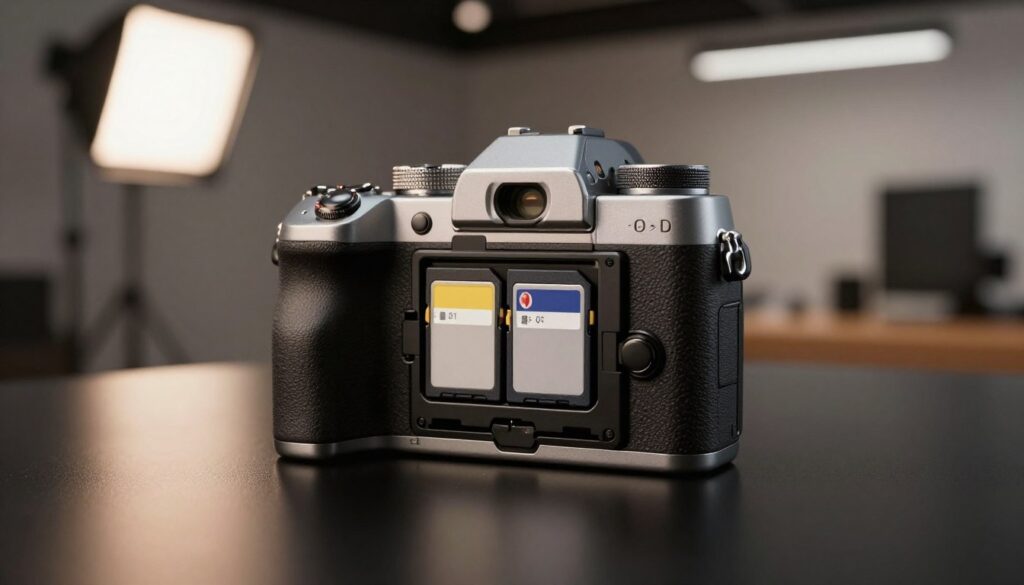
A close-up view of a high-end hybrid camera showcasing dual card slots prominently, positioned on a sleek black surface. The foreground features the camera's detailed body texture, emphasizing metallic shades and ergonomic design. The two card slots are open, revealing SD cards partially inserted, highlighting their practicality for photographers and videographers. In the middle ground, a softly blurred backdrop of a modern photography studio with soft lighting creates a professional atmosphere. The lighting is warm and inviting, casting gentle reflections on the camera. The overall mood is focused and sophisticated, reflecting the dual capabilities of the camera, suited for both photo and video demands.

Managing storage this way simplifies my workflow and reduces stress. I pick a body with reliable card compatibility and fast write speeds to match my recording settings, fps, and codec choices.

  • Redundancy: protects stills and video from card failure.
  • Flexibility: overflow or backup modes for long shoots.
  • Confidence: I focus on composition and autofocus, not lost files.
Use CaseSlot SetupBenefit
Client eventSimultaneous writeImmediate backup, low risk
Long run-and-gunPrimary + overflowExtended recording time
High-bitrate videoCFexpress + UHS-II SDSpeed and reliability for sustained recording

Stabilisation Systems for Handheld Shooting

A reliable stabilisation system often decides whether I leave the gimbal at home. In-body image stabilisation (IBIS) is the single feature that makes handheld work practical for long shoots.

IBIS lets me shoot steady video and sharp stills at slower shutter speeds. That saves time on set and reduces the need for extra gear.

The Fujifilm X-H2S has a highly effective IBIS that I trust for run-and-gun handheld video production. The Panasonic Lumix S5 II also delivers excellent stabilisation and feels rock-solid when I move quickly between setups.

Advanced systems now compensate for rotation, pitch, and yaw. That means professional-looking handheld footage without a gimbal, even at higher frame rates.

I check stabilisation when testing the best hybrid camera for my kit. I look for steady performance at 120 fps and across common frame rates, along with good autofocus coordination and minimal crop.

“Great IBIS gives me creative freedom — I can chase action, frame tight, and still trust the footage.”

  • I rely on IBIS to capture smooth handheld footage without a bulky gimbal.
  • Test stabilisation in-camera with movement, panning, and slow-motion at higher fps.
  • Pick a camera whose stabilisation matches your lens and shooting style for reliable results.

Choosing Between APS-C and Full Frame

Deciding between APS-C and full frame is really about trade-offs, not absolutes. I weigh portability, depth of field, and low‑light needs against budget and lens choices.

APS-C sensor systems give me a compact, lightweight kit for travel and fast shooting. An APS-C camera like the Fujifilm X-S20 proves you can get excellent autofocus, steady recording, and strong fps without carrying extra weight.

Full frame sensors deliver better low‑light performance and a shallower depth of field. That matters for portrait work, event photography, and any time I want creamy background separation and higher dynamic range.

I consider lens ecosystem, card and battery needs, and overall system weight before I decide. The right sensor size for me depends on the project: run‑and‑gun content favors APS‑C; controlled shoots often call for full frame.

“Pick the sensor that fits your shooting style—there’s no single correct choice.”

  • I often choose an APS-C camera like the Fujifilm X‑S20 for travel and content creation.
  • Full frame wins for low‑light and shallow DOF in professional photography.
  • The best hybrid camera for you balances sensor size, performance, and portability.

Essential Accessories for Hybrid Shooters

Good accessories turn a capable camera into a reliable production rig. I pack items that boost audio, extend recording time, and protect footage so my shoots stay smooth.

External Microphones

Audio quality matters as much as video. I always mount an external microphone to match my high-resolution footage with clean sound.

Why it matters: clear dialogue and ambient capture save hours in post and lift the overall production.

Cooling Fans

Overheating kills long takes. I use cooling fans like the Fujifilm FAN-001 on my fujifilm x-h2s to extend continuous recording without interruption.

Fans help protect sensor and processor performance during sustained 4K or high‑fps shoots.

High-Speed Memory Cards

High-bitrate video and fast still bursts need fast media. I rely on CFexpress Type B cards for long 10‑bit recording and rapid write speed.

Pick cards that match your camera’s card slots and backup strategy so you never stop shooting.

  • I always use an external microphone to match my audio to the resolution of my video.
  • The Fujifilm FAN-001 fan keeps the body cool for longer recording sessions.
  • I carry extra CFexpress Type B and high-speed SD cards to protect my footage and avoid interruptions.

“The right accessories can turn a good camera into a professional tool.”

Conclusion

Choosing the right rig comes down to aligning real shooting needs with the features a body offers. I recommend thinking about sensor size, sustained recording limits, fps, and autofocus first.

I’ve shown options that span pro-level tools and the best budget picks. Find the one that fits your workflow, because one best choice for me may differ from yours.

Focus on how the camera feels, the lens support, and card workflow. Practical comfort and reliable performance matter more than raw resolution when you shoot all day.

Thanks for reading. I hope this guide helps you pick among the best hybrid cameras and improve your photography and video work. Keep experimenting and shoot with purpose.

FAQ

What should I look for when choosing a camera that handles both stills and video?

I focus on sensor size, autofocus speed, frame rates, and recording options like open gate and 10-bit codecs. Dual card slots and support for CFexpress Type A or UHS-II help with reliability and backup. Also check in-body stabilization, lens selection, and battery life to match my shooting style.

Is an APS-C sensor good enough for professional video work?

Yes. APS-C cameras such as the Fujifilm X-S20 deliver excellent image quality and 4K up to 120 fps in a compact package. For me, the trade-off is size and cost versus low-light performance and shallow depth of field that full frame sensors provide.

Why does open gate recording matter for filmmakers?

Open gate gives the full sensor readout, which I use for maximum resolution and wider aspect ratios. It lets me reframe and stabilize footage without quality loss and is valuable when I need extra framing flexibility for high-end projects.

How important are dual card slots and what configuration should I use?

Dual slots are crucial for backup, overflow, or separating photo and video files. I usually set one slot to write simultaneously for instant backup, or use a high-speed CFexpress Type A for heavy 4K/120 fps recording and a UHS-II SD for overflow.

Do I need a camera with a stacked sensor for fast action or high frame rates?

Stacked sensors, like those in some Fujifilm and Nikon models, improve readout speed and reduce rolling shutter, which helps when shooting 240 fps or fast continuous bursts. I pick a stacked-sensor body when I prioritize speed and buffer performance.

Which camera models offer strong video features for creators on a budget?

I often recommend models like the Fujifilm X-S20 and Panasonic Lumix S5 II for great video value. They combine 10-bit recording, good autofocus, and useful frame rates without the premium price of flagship full frame bodies.

How do I decide between APS-C and full frame for my workflow?

I weigh low-light needs, depth-of-field control, lens size, and budget. Full frame gives better noise performance and shallower depth of field, while APS-C keeps gear lighter and costs lower—ideal if I shoot run-and-gun content.

Is frame rate more important than resolution for slow-motion shots?

For slow motion, high fps like 120 or 240 is essential. I prioritize frame rate over absolute resolution when I need smooth slow motion. However, balancing 4K resolution with high fps (e.g., 4K/120) is ideal when both detail and slow motion matter.

How much does autofocus reliability impact hybrid shooting?

Autofocus is vital for mixed photo/video work. I rely on fast, reliable AF with subject tracking for run-and-gun shoots and vlogging. Cameras with advanced phase-detection and face/eye tracking save time and reduce unusable footage.

What accessories should I add first to a camera kit for combined photo and video work?

I start with a fast prime or versatile zoom, an external microphone, high-speed memory cards, and a reliable gimbal or strong in-body stabilization. For long takes, a cooling fan or external recorder helps manage heat and extended open gate recording.

Can mirrorless bodies like the Sony ZV-E10 II or A7S III handle professional assignments?

Yes. The ZV-E10 II is great for vlogging and portability, while the A7S III excels in low light and long-form video with robust codecs and frame rates. I pick the body that matches the assignment’s demands for sensor size, dynamic range, and recording limits.

How do I manage file sizes when shooting high bitrate video or open gate footage?

I use high-capacity, fast CFexpress or UHS-II cards and record in efficient codecs when possible. Offloading to fast SSDs and using dual-slot overflow or backup settings ensures I don’t hit recording limits during long shoots.

Are there clear benefits to using a camera with built-in stabilization versus lens stabilization?

In-body stabilization (IBIS) gives me more consistent handheld performance across lenses. Lens stabilization complements IBIS for long telephoto work. Together they provide the best results for steady footage without a gimbal.

What role do cooling systems play in serious video work?

Cooling matters for sustained high-resolution or high-frame-rate recording. Bodies with efficient thermal design or options for active cooling let me shoot longer takes without overheating, which I count on for events and long interviews.

How should I balance autofocus and manual focus for cinematic work?

I use autofocus for run-and-gun, vlogs, and fast-moving subjects. For cinematic shots, I switch to manual focus to control focus pulls and precise rack focus. A camera with reliable focus peaking and focus assist makes manual focusing easier.

Leave a Reply

Your email address will not be published. Required fields are marked *