The Best Low-Light Camera Bodies for Night Photography and Events

best low light cameras

I have spent years mastering night photography, and I know how much gear matters when the sun goes down. When I’m shooting a wedding or a dark landscape, the right camera body makes the difference between noisy files and clean, usable images.

Reliable autofocus, strong high ISO performance, and good in-body image stabilization let me work handheld and still get sharp results. I also look for solid build and sensor size so the body holds up on long shoots and travel.

What actually improved my results in night photography over time

When I first started shooting at night, I believed that upgrading to a better camera body would solve most of my problems. While that helped, I quickly realized during real shoots that technique and lens choice had just as much impact. In one event, even with a capable camera, my images improved more when I switched to a faster lens and adjusted my settings carefully. That experience showed me that gear matters, but how you use it matters even more

From my experience, understanding your camera’s limits is what really builds confidence in low-light situations. I’ve learned to test ISO performance before important shoots and to rely on stabilization and proper exposure instead of pushing settings blindly. I don’t expect perfect results in every condition, but I do focus on getting consistent, usable images rather than chasing unrealistic perfection.

If I could give one practical tip, it would be to practice in controlled low-light environments before real assignments. Try different ISO levels, apertures, and shutter speeds to see how your setup reacts. This simple habit helps you avoid surprises and gives you a clear idea of what your equipment can handle when it really matters.

In my case, the biggest improvement didn’t come from new gear alone, but from understanding how to adapt to the limitations of each situation.

The Visual Storytelling Conference runs March 10–13, 2022, and it is a great place to learn technical tips and test gear. I recommend photographers use that kind of event to compare options and balance price with performance.

Throughout this guide I’ll help you sort features, lenses, and shooting techniques to improve your night results. My goal is to make your buying choice clear and practical for real-world conditions.

Key Takeaways

  • Choose a camera body with strong high ISO performance and good sensors.
  • Prioritize autofocus and in-body image stabilization for handheld night work.
  • Test lenses with wide aperture to cut exposure time and reduce noise.
  • Consider build quality and travel needs for long event shoots.
  • Use conferences and boot camps to compare real-world performance before buying.

Understanding the Challenges of Low-Light Photography

Shooting after sunset forces you to think differently about exposure, noise, and motion. I’ve lived through the era when anything over ISO 1600 looked unusable, and that memory shapes how I test gear today.

The Evolution of High ISO

Modern sensor design has changed expectations. Today’s camera sensors let photographers capture cleaner images and video at higher ISOs. That evolution reduces noise and expands dynamic range, so I can get usable results in tricky conditions.

Overcoming Fear of Dark Environments

Overcoming the fear of shooting in dim scenes starts with knowing your camera’s limits. I rely on image stabilization and fast lenses to gather more light and avoid extreme ISO. Using steady techniques and smart settings keeps image quality high, even handheld at night.

  • Know your sensor: test high ISO performance before a shoot.
  • Use stabilization: it buys shutter speed and reduces blur.
  • Choose glass carefully: fast lenses are the most effective way to get more light.

Key Features to Look for in the Best Light Cameras

When I choose gear for night shoots, I focus on parts that directly improve usable image quality. A strong sensor and reliable high ISO performance are the first things I test.

I want a wide dynamic range to keep shadow and highlight detail. That gives flexibility in extreme lighting and helps reduce noise when I push exposure in post.

Image stabilization matters a lot to me. Good stabilization lets me shoot slower shutter speeds without a tripod and still get sharp images.

I also check autofocus in dim scenes and test any video modes if I need motion work. Finally, I weigh price against features to find gear that serves my creative vision, not one that adds technical worry.

FeatureWhy it mattersWhat I test
Sensor & high ISOCleaner files at higher sensitivityISO 3200–12800 noise and shadow detail
Dynamic rangePreserves highlights and shadowsExpose-for-highlights then recover shadows
Stabilization & autofocusSharper images handheld; reliable focusingSlow shutter handheld and AF in dim light

Why Full-Frame Sensors Dominate Night Photography

A larger sensor often gives night shooters a clear advantage when gathering available photons. In my experience, that extra surface area translates to better sensitivity and cleaner images in dim conditions.

Dynamic Range and Light Sensitivity

Dynamic range matters for night work. A full-frame camera retains shadow and highlight detail that smaller sensors usually lose. That makes editing easier and helps preserve mood in night scenes.

I notice high ISO performance improves with sensor size. With less noise at raised sensitivities, I can shoot handheld or push exposure in post with confidence.

There are trade-offs. Full-frame bodies can be heavier and larger, so I weigh portability against final image quality. The payoff is more depth, better clarity, and wider lens options for creative shooting at night.

AdvantageImpact on Night WorkWhat I Test
Sensor areaMore photons captured; improved noise controlHigh ISO images and shadow recovery
Dynamic rangeBetter detail in highlights and shadowsExpose-for-highlight tests and recovery
Lens compatibilityMore creative options for aperture and focal lengthWide aperture lens tests on star and event shots

Top Full-Frame Picks for Professional Results

Professional night photography calls for bodies that marry strong sensors with confident handling.

Panasonic Lumix S5 pairs a 24MP sensor and dual native ISOs with excellent in-body image stabilization. That combination lets me handhold longer exposures and cut noise in dim venues.

Canon EOS R6 uses a 20MP sensor with large photosites. I get remarkably clean files even when shooting at ISO 25,600, which helps when conditions are tight.

Nikon Z 6 II adds a 24.5MP BSI sensor and dual processors for speed and reliable autofocus in dark scenes. It feels balanced during long events.

Sony A7RV brings very high resolution, ideal for night sky work and detailed images. Its detail helps when I crop or push exposure in editing.

“Choose a body that fits your hands and your workflow—sensor specs matter, but so does comfort.”

  • I weigh build and ergonomics to stay steady on long shoots.
  • Each model offers distinct video and AF features for hybrid work.
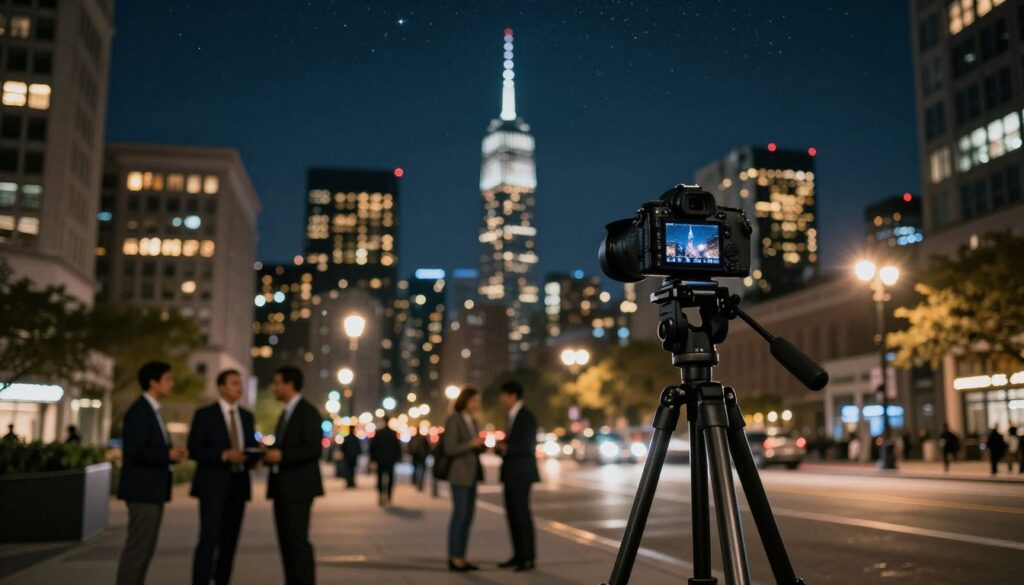
  • Micro four thirds has portability, but full-frame yields the results I need for pro night work.
A breathtaking full-frame night photography scene showcasing a vibrant city skyline under a clear starry sky. In the foreground, a professional camera on a sturdy tripod captures the illuminated buildings, with soft bokeh from nearby lights. The middle ground features a bustling street with people dressed in professional business attire, engaged in conversations, illuminated by warm street lamps. In the background, a silhouette of tall skyscrapers glimmers against the night sky, accentuated by twinkling stars. The atmosphere is artistic and vibrant, evoking a sense of creativity and professionalism, with a focus on low-light capabilities and the beauty of urban night life. Soft, ambient lighting highlights the details, capturing the essence of high-quality night photography.

ModelSensorStandout Feature
Panasonic Lumix S524 MP, dual native ISOsIn-body image stabilization for steady shooting
Canon EOS R620 MP, large photositesClean high ISO performance up to ISO 25,600
Nikon Z 6 II24.5 MP BSIDual processors for speed and precise autofocus
Sony A7RVVery high resolution sensorExceptional detail for night sky and landscape work

Reliable APS-C and Crop-Sensor Alternatives

If you want pro-level results without full-frame weight and expense, consider a well-engineered APS-C body. These options give photographers strong night performance in a smaller package.

I often reach for the Pentax K-3 III when I need rugged handling. Its 25.7‑megapixel APS-C sensor and five-axis in-body image stabilization help reduce noise and steady handheld shooting.

The Fujifilm X-T4 is another workhorse. Its fourth-generation X-Trans sensor and processor deliver clean files at ISO 6400 and above, and its autofocus holds in dim conditions.

These crop-sensor choices are more affordable than full-frame. They often include stabilization and solid video recording. For travel or event work, their compact size and good lens options matter.

  • I’ve used both and found pro-level image quality for night photography and video.
  • Advanced autofocus and recording features rival pricier systems.
  • They prove you can get excellent results in tough conditions without overspending.
ModelSensorStandout Feature
Pentax K-3 III25.7 MP APS-CFive-axis stabilization for night shooting
Fujifilm X-T4X-Trans, 4th genStrong high ISO and reliable autofocus
Typical APS-CCrop sensorsCompact, affordable option with quality results

Essential Lenses for Capturing the Night

Choosing the right glass changes how you capture the night sky and dark scenes. A camera body and sensor set the foundation, but the lens controls how much light reaches that sensor and how the scene renders.

See also  Micro Four Thirds vs. Full Frame: Which Sensor Size is Best for Travel?

I favor wide aperture options like f/1.4 or f/2.8 for night shooting. They let more light reach the sensor so I can use lower ISO and reduce noise.

Wide Aperture Benefits

Wide apertures improve exposure and let autofocus lock faster in dim conditions. Fast primes often give cleaner images than zooms at the same focal length.

Modern zooms are closing the gap, though. If I need framing flexibility, a high-quality zoom with a constant wide aperture is my compromise.

Choosing the Right Focal Length

For landscapes and the night sky I reach for wide-angle lenses. They capture the vastness of a scene and keep stars from trailing quickly in long exposures.

For events or portraits at night, a short telephoto or standard prime helps isolate subjects while keeping sharpness corner to corner.

UseFocal RangeWhy it helps
Night sky & landscape14–35mmWide view, stars and horizon in one frame
Event & portrait35–85mmSubject isolation, minimal distortion
Flexible field work24–70mm (constant aperture)Versatile framing with steady performance
  • Sharp optics keep images usable when you push exposure in editing.
  • I prefer lenses with quick autofocus and low distortion for tricky conditions.
  • Whether I use a full-frame camera or a crop-sensor model, the right lens improves final results.

The Role of Stability in Long Exposure Work

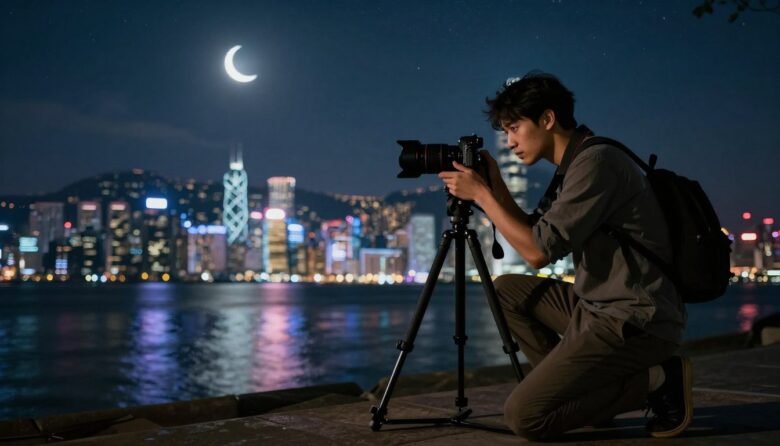
A steady support system turns a long exposure from a gamble into a repeatable result. I never head out for a night shoot without a sturdy tripod to support my camera.

Even the slightest vibration can ruin a long exposure. I use a remote shutter release so I never touch the camera body while an exposure runs.

When I travel to remote locations, I pick a lightweight carbon fiber tripod. It saves my back and keeps the rig steady in harsh conditions.

A good tripod lets me use a lower ISO and cleaner images with less digital noise. The tripod head matters too; precise framing in the dark depends on a smooth, locked head.

Many tripods include a center column hook. I hang my camera bag there on windy nights for extra stability and peace of mind.

  • Stability foundation: tripod + quality head = sharp long exposures.
  • Vibration control: remote release and lens stabilization help, but the tripod is primary.
  • Travel tips: choose durable, light gear to balance portability and performance over time.
ItemWhy it mattersWhat I check
TripodHolds camera steady for long exposuresLeg stiffness, material (carbon fiber), weight
Tripod headPrecise framing and secure lockingSmooth pan/tilt, locking strength, detent quality
Remote releaseEliminates touch-induced vibrationWired or wireless reliability and interval timing
Stability extrasAdded resistance in windy or uneven conditionsCenter hook, sandbag use, ground spikes

Leveraging AI Software to Enhance Image Quality

Modern software can pull usable detail from shots taken with older sensor tech. I use Aiarty to reduce noise while retaining texture and edge detail in both stills and video.

Aiarty analyzes a frame and separates true texture from digital grain. That lets me clean up a noisy image without the smeared look traditional smoothing tools often leave.
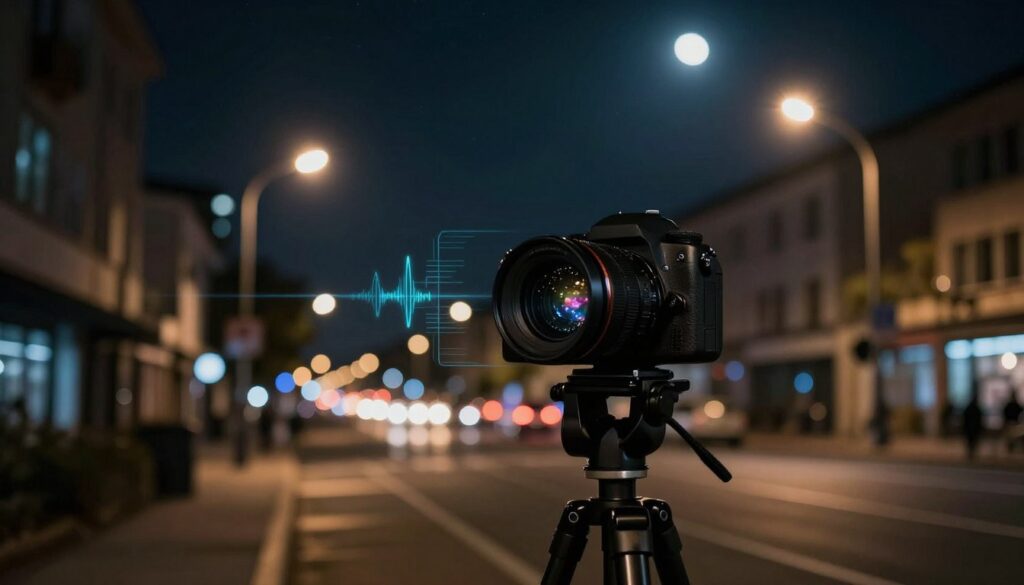
When I shoot handheld in dim venues, AI noise reduction frequently saves files that would have been unusable. It also helps me get better results from a compact sensor or an older camera.

For on-set recording, the software improves video performance by reducing grain while keeping motion natural. I still rely on solid technique, but AI extends what my gear can do.

A dimly lit urban night scene showcasing a modern camera setup on a small tripod, capturing a cityscape shrouded in the glow of street lamps. In the foreground, the camera's lens glistens, reflecting tiny flecks of color from the ambient light. The middle ground features a vibrant but slightly blurred view of illuminated buildings and nightlife, suggesting movement. In the background, a starry sky with a slight glow of the moon enhances the low-light environment. The atmosphere is serene yet dynamic, showcasing the potential of AI noise reduction technology. Subtle digital overlays represent AI functionality, such as waveforms or light patterns, enhancing the impression of image quality improvement. The setting embodies creativity and technological advancement without any textual distractions.

Use CaseWhat Aiarty DoesBenefit
Handheld night shotsTargets noise while preserving edgesSalvages frames shot at high ISO
Older sensor camerasEnhances detail and lowers grainExtends usable life of gear
Video recording in dim scenesFrame-by-frame denoise with motion-aware smoothingCleaner footage, fewer retakes
Fast workflowBatch processing and presetsConsistent results across shoots
  • Tip: Use AI after careful exposure and correct lens and autofocus choices — software is a powerful aid, not a substitute for good craft.

Must-Have Accessories for Night Shooters

A compact kit of accessories often makes the difference between a frustrating night shoot and a smooth, productive session. I pack tools that protect gear, aid focus, and keep power on long outings.

Remote Shutter Releases

A remote shutter release prevents camera shake during long exposures. I use a wired release for reliability and a wireless unit when I need distance for compositions.

External Lighting Solutions

I carry a small LED panel and a red-headlamp. The LED helps with foreground fill and quick lighting for short video clips, while the red headlamp preserves night vision as I tweak settings and autofocus in the dark.

Protective Filters and Field Gear

Protective filters keep lenses safe from dust and moisture when conditions turn rough. I also bring extra batteries, a weather-resistant camera bag for travel, and a microfibre cloth to keep the lens clear.

  • Spare batteries: cold air drains power fast—bring extras.
  • Organized bag: protects the body, lens, and accessories on the move.
  • Red lighting: preserves night vision for better framing and settings.

“Pairing these accessories with a reliable camera and lens makes night shooting far more predictable and rewarding.”

Balancing Budget and Performance

Smart shopping means prioritizing the parts of a kit that most affect night performance. I always put the camera body and a quality lens first. Those two components shape how clean each image will look at higher ISO.

I recommend considering used options to stretch your price range. A lightly used professional body often gives better performance than a new entry model for the same price.

When funds are tight, choose a wide aperture lens before chasing extra megapixels. A faster lens lets you use lower ISO and improves autofocus in dim scenes.

  • I favor gear I actually use every week over flashy specs I never need.
  • Entry-level bodies paired with a strong lens can produce pro-level photos when you master exposure and composition.
ChoiceWhy it helpsWhen to pick it
New mid-range body + prime lensBalanced performance and warrantyIf you want current features and reliability
Used professional bodyHigher sensor quality at lower priceIf you want strong high-ISO performance
Entry body + fast zoomVersatile framing with wide apertureIf you need flexibility for events

“The best cameras are the ones you use; build a kit that fits your style and grows with you.”

Conclusion

Great night photos grow from repeated trials and thoughtful adjustments to your setup. I rely on steady technique and smart gear choices to shape each shoot. That combination helps me control exposure, reduce noise, and preserve mood.

I hope this guide helped you spot the best cameras and lenses for night photography and improve overall image quality. Practice with the tools you have, then refine your kit as your needs evolve.

Mastery of the best low light workflow blends equipment, timing, and creative risk. Keep experimenting; each session teaches something new.

Whether you’re a pro or an enthusiast, I encourage fellow photographers to keep shooting and share what you learn. Thank you for reading — I look forward to seeing your night work.

FAQ

What sensor size should I choose for night and event shooting?

I usually recommend a full-frame sensor for the best performance after sunset. Full-frame bodies deliver better dynamic range and improved light sensitivity, which helps keep noise down when I raise ISO. That said, modern APS-C and Micro Four Thirds bodies with strong in-body image stabilization and fast lenses can still produce excellent results for travel or budget-conscious work.

How much does aperture matter for nighttime images?

Aperture is critical. I prefer lenses with wide maximum apertures (f/1.2–f/2.8) because they let in more photons and allow faster shutter speeds. Wider glass gives me cleaner images at higher ISO and lets me isolate subjects with shallow depth of field when needed.

Can I shoot handheld after dark without a tripod?

Yes, in many situations. I rely on in-body image stabilization, fast lenses, and careful technique to handhold at slower shutter speeds. If I need ultra-long exposures, or I want pinpoint stars, I bring a sturdy tripod or a gimbal for video to avoid blur.

What ISO range is usable for night portraits and events?

I typically shoot within an ISO range where noise remains manageable for my workflow. On high-performing full-frame bodies I feel comfortable up to ISO 6400 for event coverage; for portraits I try to stay lower. Always test your specific camera to see where noise reduction and detail meet your standards.

Which autofocus features matter most in low illumination?

Fast and accurate autofocus with good low-light sensitivity is a must. I look for systems with phase-detect pixels, face/eye detection, and reliable tracking. These help me lock onto moving subjects in dim venues where contrast is limited.

Are fast primes necessary, or can zooms do the job?

Both have roles. I carry a fast prime for maximum light and image quality plus a fast zoom for framing flexibility during events. Modern constant-aperture zooms like 24-70mm f/2.8 can cover most assignments when I need versatility.

How much does software and AI help with nighttime files?

Post-processing helps a lot. I use noise reduction, exposure blending, and AI-powered denoising to rescue high-ISO images and expand dynamic range. These tools can make usable frames from shots that look noisy straight out of camera.

What accessories should I never forget for night work?

I always pack a tripod, a remote shutter release, spare batteries, and at least one fast prime. For events I add a compact off-camera flash or continuous LED and ND/UV protective filters when needed to preserve lenses and control highlights.

How do I choose lenses for astrophotography versus street night scenes?

For the night sky I favor ultra-wide, fast lenses with minimal coma and strong corner sharpness. For street and event work I pick wider-aperture standard or short-telephoto lenses to isolate subjects and handle varying distances. Focal length choice depends on composition and working distance.

Is stabilization more important than sensor size?

Both matter. I find that in-body stabilization can extend handheld shutter speeds significantly, letting smaller sensors punch above their weight. But when absolute high-ISO performance and dynamic range matter most, sensor size still leads. Ideally, get a body that offers both.

How should I balance budget and low-illumination performance?

I set priorities: the body’s ISO and dynamic range, lens aperture, and stabilization. If I must compromise, I invest in glass first—fast lenses last longer across camera upgrades. Crop-sensor bodies paired with bright primes can deliver strong value for night work.

Leave a Reply

Your email address will not be published. Required fields are marked *